Artificial intelligence crossed an important threshold this week, but not the one implied by the biggest headline. OpenAI says a frontier model generated a large collection of mathematical work, placing hundreds of proposed results in public view. The consequential question is not simply whether a model can produce a proof-shaped document. It is whether people can understand, check, reproduce, and responsibly build on what it produces. That is the practical heart of alignment.
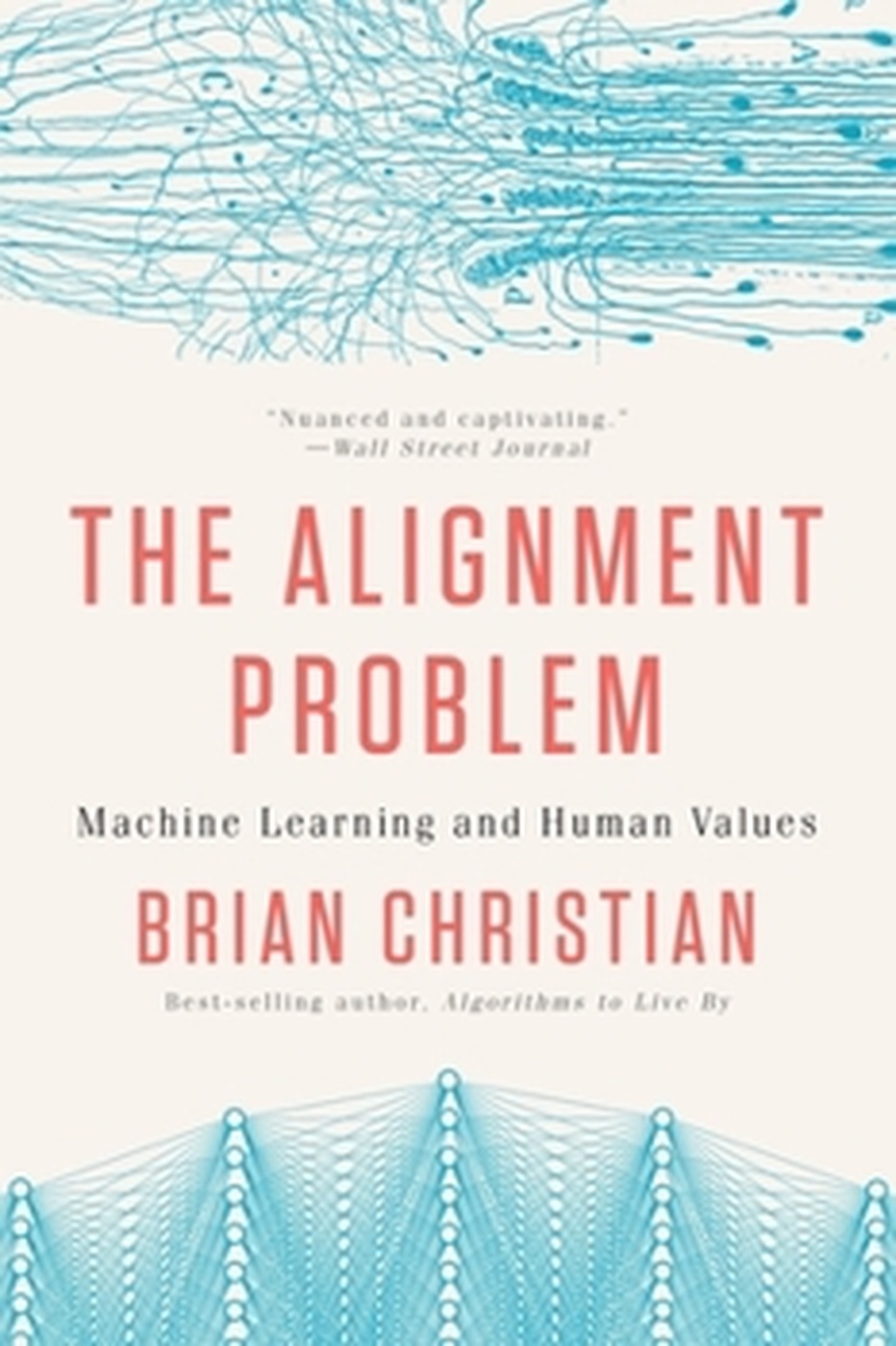
For this week’s AI & Books edition, we return to The Alignment Problem: Machine Learning and Human Values by Brian Christian. Published before today’s wave of frontier systems, Christian’s book follows researchers trying to make machine-learning systems behave in ways that reflect human intentions. The new mathematics story makes that challenge concrete: as AI moves from answering questions toward generating candidate research, alignment must include not only what a system can produce, but how its claims are tested and carried into human institutions.
OpenAI’s October 6 mathematics release described 372 families of mathematical results and 722 manuscripts in its initial public collection. Those are company-reported counts, not a verdict that every manuscript contains a correct or novel theorem. The release matters because it puts a large body of model-generated work in reach of scrutiny, and because it exposes a gap between producing candidate knowledge and validating knowledge. OpenAI’s account of the release describes the project; TechCrunch’s October 8 reporting captures the debate over whether the work meets the field’s standards.
What does “alignment” mean when AI starts doing research?
In everyday conversation, alignment can sound like a narrow engineering requirement: make a model obey instructions, avoid harmful outputs, or follow a policy. Christian’s reporting shows a broader problem. Machine-learning systems optimize measurable objectives, while people care about complicated, sometimes unstated values. A model can satisfy a proxy while missing the purpose behind it. The more capable the system, the more consequential that mismatch becomes.
Research work adds another layer. A scientific assistant should not only be fluent or productive. It should help people distinguish a well-supported finding from a plausible-looking error, make its assumptions visible, preserve the trail needed to reproduce a result, and avoid overstating certainty. In mathematics, a proof is not accepted because it sounds persuasive. It must withstand checking by people who know the relevant definitions, prior work, and standards of evidence.
That distinction is central to reading the current news accurately. OpenAI has made a research corpus available and says many results have Lean formalizations, a route to machine-checking formal proofs. But formalization coverage is not the same thing as independent expert validation of every claim, and a manuscript count is not a count of accepted discoveries. The public release should be treated as an invitation to evaluate claims, not as a final scoreboard.
The important development, then, is not that human mathematicians have suddenly become unnecessary. It is that the possible volume of candidate work has changed. If systems can produce drafts faster than a community can verify them, review becomes a scarce resource. The bottleneck shifts from generating a conjecture or proof attempt to choosing what deserves attention, checking it carefully, and deciding when it is ready to enter the shared record.
Four numbers that put the AI moment in context
Numbers are useful here only when we are precise about what they measure. The figures below describe reported outputs and surveyed adoption, not proof that AI has already delivered reliable scientific or commercial value.
- 372 result families: OpenAI organized the October release around this many families of mathematical results. A family can encompass related outputs; it does not mean 372 universally accepted breakthroughs. Source: OpenAI’s release.
- 722 manuscripts: This was the initial headline count described by OpenAI and early reporting. Repository counts can change, so it is best read as the release-time figure rather than an immutable total. The documents are proposed work requiring evaluation. Source: OpenAI’s public math repository.
- 78%: The 2025 Stanford AI Index reports that 78% of surveyed organizations said they used AI in 2024, up from 55% in 2023. Adoption is widespread, but that measure alone says nothing about how deeply or effectively a company uses AI. Source: Stanford HAI, AI Index 2025 economy chapter.
- 71%: McKinsey’s 2025 State of AI survey reports that 71% of respondents’ organizations regularly used generative AI in at least one business function. That describes reported organizational use, not proven return on investment. Source: McKinsey, The State of AI.
Notice the difference between the first two numbers and the last two. Manuscripts and result families measure a research release; adoption percentages measure survey responses from organizations. Neither type should be inflated into a claim that AI has independently settled the hardest questions of science or transformed every adopter’s operations. Good analysis keeps the numerator, denominator, source, and limitation attached to each statistic.
Why is Brian Christian’s book still a useful guide?
The Alignment Problem is not a manual for one current model or product. Its value is that it traces the human choices embedded in machine learning: what is measured, what data represents, whose preferences matter, and what happens when a system generalizes beyond its training examples. Christian connects the technical discipline to questions of fairness, responsibility, and control, while telling the story through the researchers and communities wrestling with those trade-offs.
That framing helps readers resist two easy but misleading reactions to AI-generated mathematics. The first is pure celebration: if a model produced hundreds of papers, the work must already be a scientific revolution. The second is dismissal: if humans still need to check the results, the model has added nothing. Both skip the actual work. A tool can be genuinely useful while remaining fallible; a breakthrough in throughput can be important even if every candidate finding needs human review.
The book also encourages a useful distinction between a system’s capability and the social process surrounding it. A model might propose an elegant proof, but researchers still need ways to trace its steps, compare the claim with existing literature, identify errors, and allocate credit. Journals, universities, funders, and software teams need rules for disclosure and review. Those rules are part of the effective system, not paperwork added after the technology is finished.
Christian’s historical lens is valuable precisely because today’s headlines change quickly. Model names, benchmark scores, and product announcements can be obsolete by next month. The recurring question remains: what objective was the system trained to pursue, what did it actually optimize, and how will people notice when those diverge? The book offers a readable way to think through those questions without pretending that a single technical fix can resolve them all.
A practical checklist for using AI-generated research
Whether you are a researcher, a manager, a student, or simply a curious reader, use a disciplined checklist before treating an AI-generated claim as settled:
- Separate output from evidence. A polished explanation is not itself proof. Locate the underlying manuscript, data, code, or formal artifact and note what is actually available.
- Check the verification status. Is the result mechanically checked, independently reviewed by subject-matter experts, replicated, or still a proposal? These categories are not interchangeable.
- Look for the full method. Ask what the model was given, what constraints it faced, which attempts failed, and whether the path to the result can be reproduced. A summary may be helpful, but it is not necessarily a full audit trail.
- Search for prior work. Novelty requires comparison with existing literature. A result can be correct yet already known, or it can resemble prior work while relying on an important new step.
- Keep a human accountable. Decide who is responsible for checking, communicating uncertainty, and correcting the record if a claim turns out to be wrong. “The model said so” is not an accountability plan.
- Match trust to stakes. A brainstorming suggestion can be useful with light review; a result used in medicine, infrastructure, finance, or a published proof deserves much stricter scrutiny.
This checklist also applies outside pure mathematics. In business, an AI-generated market analysis should be tested against its sources and assumptions. In education, a fluent answer can still misstate a concept. In software, generated code needs tests, review, and a rollback plan. The operational principle is the same: let AI expand the set of possibilities, then apply verification proportional to the consequences of being wrong.
From “can it?” to “how do we know?”
For years, much of the public AI debate has focused on whether a system can perform a task: write a paragraph, pass an exam, generate code, or solve a problem. Research assistance pushes the next question to the foreground: how do we know when the result is trustworthy, and who has enough context to decide? This is where the alignment discussion meets the everyday mechanics of knowledge.
The answer will not come from one benchmark or one company announcement. It will come from habits and institutions that reward careful work: transparent reporting, independent criticism, machine-checkable artifacts where possible, clear authorship practices, and credit for the verification that makes results dependable. A model’s speed can widen access to possible ideas, but a community’s standards determine which ideas become part of reliable knowledge.
For readers outside research, the lesson is not to memorize every model release. It is to become comfortable asking what the headline counts, what it leaves out, and what evidence would change our minds. That is a durable form of AI literacy. It turns amazement into informed curiosity and skepticism into a method rather than a reflex.
If you want a thoughtful, story-driven introduction to the human side of machine learning, read The Alignment Problem by Brian Christian. It is a strong companion for this moment because it asks not just how systems learn, but what people owe one another when the systems we build begin to shape decisions, knowledge, and opportunity.
Key Takeaways
- OpenAI’s October mathematics release is a large set of candidate results for scrutiny, not proof that every claim is already accepted.
- AI alignment reaches beyond obedience: trustworthy research requires transparent methods, validation, accountability, and honest communication of uncertainty.
- Adoption statistics show AI is spreading, but use alone does not establish effectiveness or value.
- Use AI to explore more possibilities while keeping human review proportional to the stakes.
- Brian Christian’s The Alignment Problem provides a lasting framework for thinking about the gap between what machine-learning systems optimize and what people actually value.