The Atlas of Alignment: Navigating the Neural Blueprints of Elite Performance
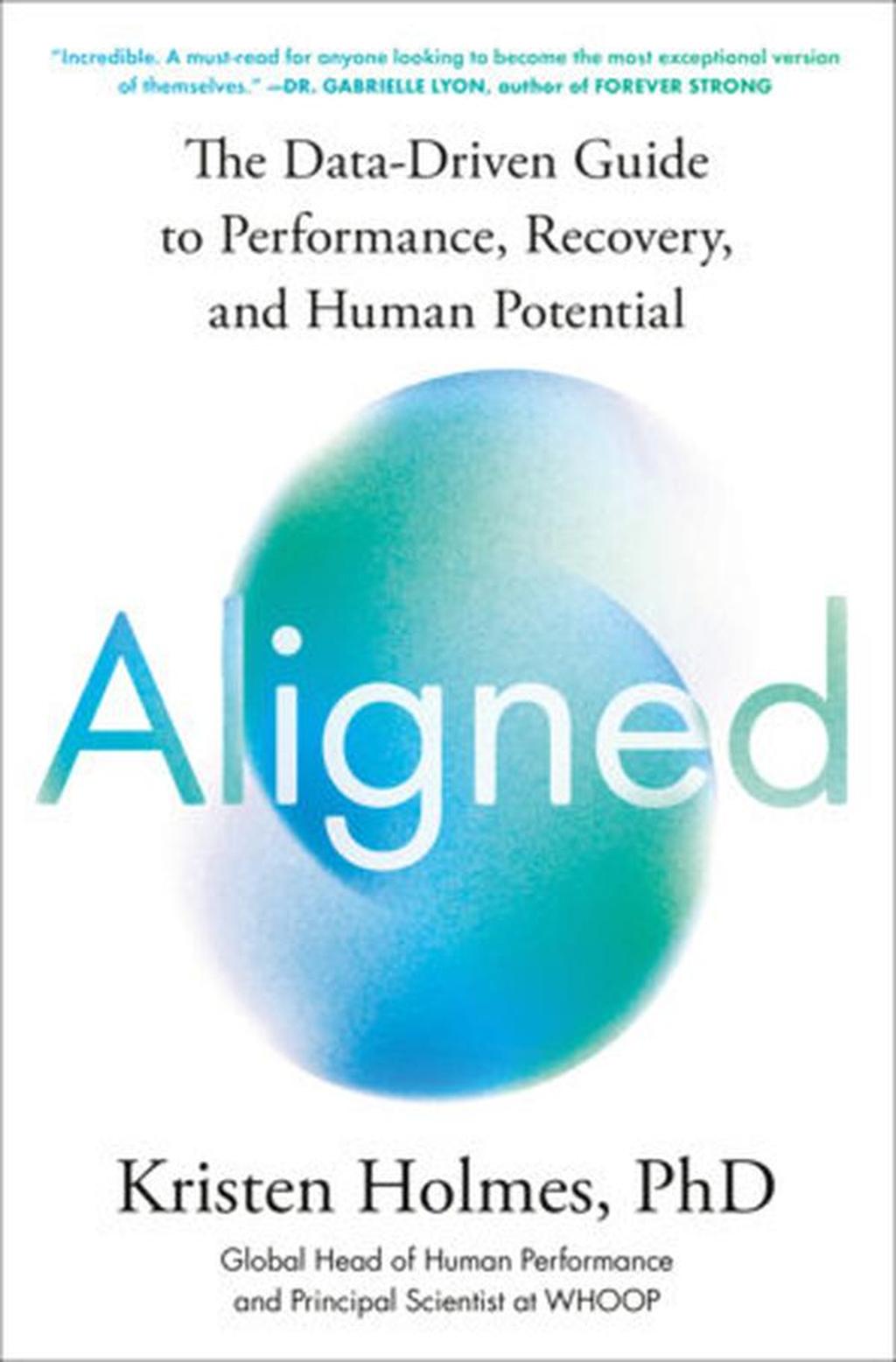
In the vast, shifting archipelago of human performance, most seekers navigate by stars that have long since gone cold. They rely on the compass of 'feeling'—a tool famously susceptible to the magnetic interference of stress, fatigue, and ego. But a new chart has emerged. Kristen Holmes, PhD, in her seminal work Aligned: The Data-Driven Guide to Performance, Recovery, and Human Potential, offers the Master Cartographer a new set of surveying tools. This is not just a book; it is a blueprint for the biological architecture of excellence.
To align is to map the internal terrain of the body against the external demands of the mission. It is the art of ensuring that your physiological infrastructure can support the skyscrapers of your ambition. As we delve into the topography of Aligned, we discover that the secret to the summit is not found in the climb itself, but in the base camp of recovery. This comprehensive guide will dissect the core tenets of Holmes' philosophy through the lens of cognitive cartography, helping you build a roadmap for a life lived at the peak of your potential.
The Topography of Tension: Mapping Heart Rate Variability (HRV)
The foundational bedrock of Holmes' framework is Heart Rate Variability (HRV). If the heart is the engine of our vessel, HRV is the subtle vibration of the hull that tells us how much strain the structural integrity can handle. A high HRV represents a landscape of flexibility—a valley where the nervous system can pivot between the high-altitude demands of the sympathetic (fight or flight) and the deep-sea depths of the parasympathetic (rest and digest).
The Sympathetic Ridge and the Parasympathetic Valley
Most high-performers spend their lives trekking along the Sympathetic Ridge. It is a place of sharp peaks, thin air, and constant alertness. While the views are spectacular, the ground is unstable. The air is thick with cortisol, the hormone of the hunt, which tightens our focus but narrows our perspective. In this state, the map looks different; every shadow is a threat, and every obstacle is an insurmountable mountain.
Holmes argues that sustainable peak performance requires a descent into the Parasympathetic Valley. This is where the maps are redrawn, the tools are sharpened, and the spirit is replenished. This is the domain of the Vagus nerve, the hidden river that flows through the center of our map, carrying signals of safety and restoration to the brain. Without frequent visits to this valley, the ridge eventually crumbles under the weight of chronic cortisol.
Mapping your HRV is the equivalent of checking the weather patterns before a voyage. When your HRV is suppressed, the internal seas are stormy. Pushing for a record-breaking ascent on such a day is not 'grind'; it is bad cartography. It is navigating into a known gale without a keel. A Master Cartographer knows when to dock and when to sail.
The Neurobiology of Strain: The Prefrontal Cortex vs. The Amygdala
To understand the 'why' behind the 'how', we must examine the neural architecture that Holmes references. Our brains are not single, unified maps; they are layered territories with competing interests. The Prefrontal Cortex (PFC) is the Cartographer’s Studio—the seat of logic, planning, and long-term vision. The Amygdala, however, is the Watchtower—a primitive outpost designed to detect danger and sound the alarm.
The Hostile Takeover of the Map
When we are out of alignment, the Watchtower takes over the Studio. Under conditions of high strain and low recovery, the Amygdala hijacks the neural pathways, flooding the system with adrenaline and shutting down the analytical capacities of the PFC. Suddenly, the 'Master Plan' is abandoned in favor of immediate survival. We make impulsive decisions, we lose our ability to empathize, and our creative horizons shrink to the size of a postage stamp.
Holmes demonstrates that by managing our physiological state, we protect the sovereignty of the PFC. We ensure that the Cartographer remains in control, even when the terrain becomes treacherous. This is the essence of 'Alignment': maintaining the neural infrastructure that allows for high-level thinking in high-stakes environments.
The Circadian Compass: Orienting the Biological Clock
Every map requires a north star. For the human body, that star is the sun. Holmes emphasizes that our internal geography is governed by the Circadian Rhythm—the master clock that dictates when the tides of energy rise and when they fall. To be 'Aligned' is to synchronize your actions with these biological rhythms.
Light as the Surveyor’s Tool
Light is the primary signal that sets our internal coordinates. Early morning light acts as a 'reset' for our hormonal map, triggering the release of cortisol for the day's trek and setting a timer for the melatonin that will guide us into the harbor of sleep. This is not just 'health advice'; it is the fundamental calibration of your surveying equipment.
When we ignore these signals—by staring at artificial screens long into the night or staying in the shadows during the day—we become 'disoriented.' We are effectively trying to navigate a desert using a map of the ocean. Our hormones become mistimed, our metabolism falters, and our cognitive maps become blurred. The Master Cartographer treats light as a sacred input, ensuring that the internal clock is always synced with the external reality.
The Architecture of Recovery: The Four Pillars of the Foundation
In Aligned, Holmes outlines four distinct pillars that form the foundation of our physiological state. Think of these as the four cornerstones of the Master Cartographer’s guild hall:
1. Sleep: The Great Archive
Sleep is not an absence of activity; it is a frenzy of architectural work. It is where the day’s data is sorted, stored, and integrated into the long-term map. During Deep Sleep, the body repairs the physical hull—building muscle and restoring the immune system. During REM sleep, the mind engages in 'Creative Cartography,' connecting disparate ideas and processing the emotional weight of the journey.
Crucially, sleep is the only time when the 'Glymphatic System'—the body’s waste management crew—can clear the debris from the neural pathways. A mind without sleep is a map covered in dust and cobwebs, making it impossible to see the path forward clearly.
2. Nutrition: The Fuel for the Fleet
Every cell in the body is built from the materials we ingest. A cartographer cannot draw a precise map with blunt pencils; a body cannot perform elite feats on inflammatory fuel. Holmes advocates for a 'bio-individual' approach to nutrition, recognizing that every traveler’s metabolic map is unique. However, the universal truth remains: processed fuels lead to a breakdown in communication between the organs, causing 'static' on the map.
3. Hydration: The Navigable Waterways
Fluidity is life. Dehydration thickens the blood, slows the neural signals, and clouds the mind. It makes every mile of the journey feel like two. When the waterways of the body are dry, the transport of nutrients to the brain is throttled. The Cartographer’s ink runs dry, and the blueprints of the future remain unwritten.
4. Movement: The Exploration of the Terrain
The body is designed to explore. Movement is how we maintain the elasticity of our maps. It is the physical manifestation of our agency in the world. But Holmes warns against 'Blind Movement'—exercising simply for the sake of exhaustion. Instead, movement should be seen as a way to calibrate the body's sensors, keeping the joints mobile and the heart resilient.
Data-Driven Intuition: When the Map Becomes Part of the Traveler
One of the most profound insights in Aligned is the relationship between data and intuition. Many skeptics argue that relying on wearables and spreadsheets distances us from our 'gut feeling.' Holmes suggests the opposite. By tracking our data over time, we build a highly accurate 'Internal Map' that eventually allows us to sense our state without needing to look at a device.
This is 'Data-Driven Intuition.' It is the point where the Cartographer no longer needs to constantly check the compass because they have become so attuned to the wind and the stars that they know the direction by instinct. The data is not a crutch; it is a training tool for the subconscious.
The Surveyor's Schedule: A Practical Blueprint for Alignment
To implement the lessons of Aligned, the Master Cartographer must establish a daily ritual of calibration. Here is a sample blueprint for a day lived in alignment:
- 06:00 - The Dawn Calibration: Seek immediate sunlight. This sets the 'North' on your circadian compass. Avoid digital inputs for the first 30 minutes to keep the PFC in control.
- 08:00 - The Resource Assessment: Check your HRV and sleep data. If your resources are low, adjust the day's 'trek' to a lower intensity. If they are high, prepare for a summit attempt.
- 12:00 - The Midday Fueling: Nutrient-dense fuel that supports steady energy levels, avoiding the 'Foggy Marsh' of a glucose crash.
- 16:00 - The Movement Exploration: A session of movement to maintain the physical infrastructure, scaled to the day's resource availability.
- 20:00 - The Harbor Entry: Dim the lights. Signal to the body that the voyage is ending. Engage in parasympathetic activities like reading or breathwork to prepare for the Great Archive of sleep.
The Master Cartographer’s Philosophy: Why Alignment Matters in 2026
We live in an era of unprecedented cognitive demand. The maps of 2026 are more complex, more volatile, and more digital than ever before. In this environment, the 'Brute Force' approach to achievement is a relic of the past. It is an unsustainable strategy that leads to the total destruction of the traveler.
The philosophy of Alignment is a declaration of sovereignty. It is the refusal to let the chaos of the world dictate the state of your biology. It is the commitment to being the Master Cartographer of your own life, ensuring that your map is always accurate, your tools are always sharp, and your path is always chosen with intent.
Key Takeaways for the Master Cartographer
- Measure to Map: You cannot manage what you do not measure. Use wearables and data not as shackles, but as surveying equipment to understand your unique physiological baseline.
- Recovery is Proactive: Do not wait for a breakdown to rest. Recovery must be scheduled as a core performance metric, not as an afterthought to exhaustion. The best explorers spend more time planning the camp than they do in the wind.
- The 24-Hour Cycle: Your performance today was mapped by your behavior yesterday. The quality of your sleep and your exposure to light are the leading indicators of tomorrow's capacity. Every night is a preparation for the next day's map.
- Identify the 'Strain-Recovery Gap': The space between the stress you take on and the recovery you allow is where injury and burnout live. The goal of Alignment is to narrow this gap, ensuring the structural integrity of your vessel.
- Sovereignty Through Biology: By mastering your physiology, you protect your cognitive assets. A well-rested brain is the only tool capable of navigating the complexities of the modern world.
Conclusion: Charting a Course to the Infinite Horizon
Kristen Holmes' Aligned teaches us that the highest form of performance is not a sprint; it is a perpetual expedition. It is a recognition that the human body is the most sophisticated piece of surveying equipment ever created, and like all fine instruments, it requires meticulous care and calibration.
By mastering the internal topography of our own biology, we stop being victims of our environment and start being the architects of our destiny. We learn that 'human potential' is not a fixed destination on the map, but a horizon that recedes as we approach it, always offering new lands to discover and new heights to scale.
Are you ready to redraw your map? The tools are in your hands. The data is in your veins. The mission is clear. It is time to get Aligned.
Want to see the visual blueprints of Kristen Holmes' framework? Visit Summary Maps to explore the full interactive mind map of Aligned and transform this data into your daily reality. Master your terrain today.
Want to go deeper?
Turn this book into an interactive visual mind map on Summary Maps. Explore every chapter, key idea, and connection — all in one view.
Try Summary Maps Free →