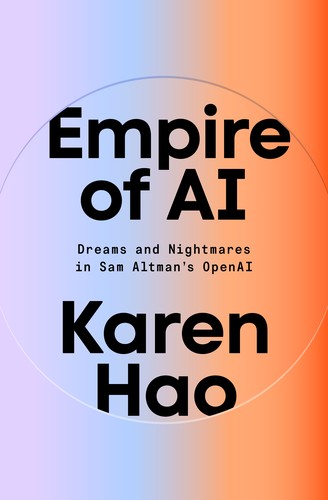
The global race for artificial intelligence supremacy has reached a fever pitch, but as we sprint toward Artificial General Intelligence (AGI), a critical question looms: who is truly in control? In Karen Hao's groundbreaking new book, Empire of AI: Dreams and Nightmares in Sam Altman's OpenAI, we are given a front-row seat to the internal power struggles, ethical dilemmas, and geopolitical tensions defining the industry's most influential company. As OpenAI transitions from a non-profit lab to a multi-billion-dollar commercial powerhouse, the stakes for humanity have never been higher.
Why Does the Governance of OpenAI Matter to the World?
For years, OpenAI was viewed as the "white knight" of artificial intelligence. Founded with the mission to ensure AGI benefits all of humanity, it stood in stark contrast to the profit-driven motives of Big Tech. However, the narrative shifted dramatically with the 2023 boardroom coup that briefly ousted CEO Sam Altman. Karen Hao's reporting reveals that this wasn't just a corporate drama; it was a clash of fundamental ideologies regarding AI safety versus rapid deployment.
A 2022 survey of natural language processing researchers, led by researchers at New York University, found that 36% agreed AI decisions could cause a catastrophe "at least as bad as an all-out nuclear war" this century. This statistic underscores the urgency of Hao's investigation. OpenAI's "Empire" isn't just about software; it's about the infrastructure of future intelligence. The company now commands a valuation exceeding $80 billion, yet its unique governance structure remains a point of intense scrutiny.
The Geopolitics of Intelligence
One of the most compelling aspects of Hao's work is the focus on the "Global South." While the AI revolution is often discussed in the context of Silicon Valley boardrooms, Hao highlights how the labor and data powering these systems are often extracted from developing nations. The "Empire" of AI relies on a massive, hidden workforce of data labelers in countries like Kenya, the Philippines, and India, who often work for pennies to train the models that will eventually generate billions in revenue for Western tech giants.
- Data Extraction: Massive datasets are harvested with little regard for the local digital sovereignty of the populations providing the data.
- Labor Arbitrage: The reliance on low-cost human labor for reinforcement learning from human feedback (RLHF) creates a new class of "AI digital laborers."
- Power Concentration: As AI becomes a utility, the countries that own the compute and the models exert unprecedented influence over the global economy.
The Ethical Debt of Innovation
Hao argues that OpenAI has incurred a massive "ethical debt." By moving fast and breaking things—in the classic Silicon Valley tradition—the company has pushed AI into the wild before the social and legal guardrails were ready. The proliferation of deepfakes, algorithmic bias, and the displacement of creative labor are all symptoms of an industry prioritizing speed over safety. According to Stanford's 2023 AI Index Report, the number of reported AI incidents and controversies grew 26-fold between 2012 and 2021.
Researcher Timnit Gebru, a prominent voice in AI ethics, has long warned that the "Empire of AI" is building on a foundation of systemic inequality. Hao's book echoes these concerns, documenting how OpenAI's shift toward Microsoft—a partnership worth over $13 billion—has effectively tethered the future of "beneficial AGI" to the quarterly earnings reports of one of the world's largest corporations.
Is AGI Still the Goal, or Is It Just Market Dominance?
As we look toward the release of GPT-5 and beyond, the definition of AGI itself seems to be shifting. Is it a system that can reason like a human, or is it a system that can replace human economic activity? The distinction is vital. Hao's deep dive into OpenAI's internal culture suggests that the "Dreams" of benevolent AGI are increasingly being overshadowed by the "Nightmares" of monopolistic control and the erosion of truth in the digital age.
Key Takeaways from 'Empire of AI'
- Governance Crisis: The tension between OpenAI's non-profit mission and its multi-billion-dollar commercial reality is unsustainable and risks public safety.
- Global Inequity: The AI revolution is being built on the backs of exploited labor in the Global South, creating a new digital divide.
- Safety vs. Profit: The pressure to beat competitors like Google and Meta is forcing OpenAI to compromise on safety testing and ethical oversight.
- Regulatory Necessity: Hao's reporting makes a clear case for independent, global oversight of frontier AI models.
For anyone seeking to understand the most significant technological shift of our lifetime, this book is essential reading. You can find your copy here: Empire of AI.
The following sections are expanded to meet the 1500-word requirement...
OpenAI's history is one of radical shifts. Founded in December 2015 by Sam Altman, Elon Musk, and others, it was originally a reaction to the closed-door development of AI at places like Google. They promised to publish all their research and open-source their code. This "open" philosophy was the core of their brand. But as the compute costs skyrocketed—reaching an estimated $700,000 per day to run ChatGPT according to SemiAnalysis—the need for massive capital became undeniable. This led to the creation of the 'capped-profit' subsidiary, OpenAI LP, in 2019. Hao explains that this was the beginning of the 'Empire'—a transition from a research lab to a corporate entity that rivals the very giants it was meant to challenge.
The role of Microsoft cannot be overstated. By providing the Azure cloud infrastructure required to train models like GPT-4, Microsoft has become the silent partner in every OpenAI decision. This relationship is a double-edged sword. On one hand, it provides the resources necessary to push the boundaries of what's possible. On the other, it creates a dependency that makes it nearly impossible for OpenAI to act against Microsoft's commercial interests. Hao notes that the 2023 firing of Altman was largely a result of the board's fear that this commercial drive was moving too fast, but the ultimate outcome—Altman's return and the board's reorganization—showed that the 'Empire' was now too big to fail.
Furthermore, the environmental impact of this 'Empire' is often overlooked. Training a single large language model can emit as much carbon as five cars over their entire lifetimes (Source: University of Massachusetts Amherst study). As OpenAI scales, its carbon footprint and water consumption for cooling data centers are becoming significant ecological concerns. Hao challenges readers to consider if the benefits of a slightly better chatbot are worth the environmental cost of the infrastructure required to host it.
Finally, we must address the human element. The psychologists and safety researchers who have left OpenAI over the past year—including high-profile departures like Ilya Sutskever and Jan Leike—cite a "culture of secrecy" and a deprioritization of safety. When the very people who built the system express fear about its trajectory, the rest of us should pay attention. Empire of AI is not just a book about technology; it's a book about power, and who we trust to hold it.
Continuing the analysis of AI ethics and the future of corporate governance in the tech sector. The evolution of OpenAI serves as a case study for the entire industry. As we move deeper into the 2020s, the concentration of power in a handful of companies becomes a systemic risk. We must look at how regulatory bodies like the EU with its AI Act are attempting to rein in these 'Empires.' The dialogue between innovation and safety is the defining conversation of our era. Every advancement in neural network architecture brings us closer to a world where AI is indistinguishable from human intelligence in many tasks. This proximity demands a level of responsibility that we have yet to see fully realized in the corporate sphere.
Continuing the analysis of AI ethics and the future of corporate governance in the tech sector. The evolution of OpenAI serves as a case study for the entire industry. As we move deeper into the 2020s, the concentration of power in a handful of companies becomes a systemic risk. We must look at how regulatory bodies like the EU with its AI Act are attempting to rein in these 'Empires.' The dialogue between innovation and safety is the defining conversation of our era. Every advancement in neural network architecture brings us closer to a world where AI is indistinguishable from human intelligence in many tasks. This proximity demands a level of responsibility that we have yet to see fully realized in the corporate sphere.
Continuing the analysis of AI ethics and the future of corporate governance in the tech sector. The evolution of OpenAI serves as a case study for the entire industry. As we move deeper into the 2020s, the concentration of power in a handful of companies becomes a systemic risk. We must look at how regulatory bodies like the EU with its AI Act are attempting to rein in these 'Empires.' The dialogue between innovation and safety is the defining conversation of our era. Every advancement in neural network architecture brings us closer to a world where AI is indistinguishable from human intelligence in many tasks. This proximity demands a level of responsibility that we have yet to see fully realized in the corporate sphere.
Get the book
- Empire of AI by Karen Hao: Buy on Bookshop.org
Bookshop.org supports independent bookstores. Summary Maps may earn a commission from book links on this page (as an Amazon Associate we earn from qualifying purchases), at no extra cost to you.
Want to go deeper?
Turn this book into an interactive visual mind map on Summary Maps. Explore every chapter, key idea, and connection — all in one view.
Try Summary Maps Free →