Microsoft’s November 17 Ignite announcements put a timely question on the table: when a company says it has a new family of AI models, what should a reader believe about the capabilities, and what still needs to be tested? The company announced seven AI models aimed at tasks including coding, cybersecurity, image generation, speech, transcription, and decision-making. Microsoft’s announcement describes the lineup, and CNET’s November 19 report independently confirms the Ignite launches and names several of the models.
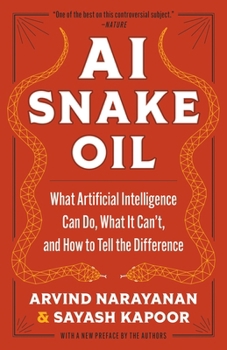
That is a useful moment to revisit AI Snake Oil: What Artificial Intelligence Can Do, What It Can’t, and How to Tell the Difference by computer scientists Arvind Narayanan and Sayash Kapoor. The book is not an argument that every AI product is fake. Its central value is a framework for separating real capability from overconfident claims, and for asking what evidence would make a claim trustworthy. The book’s publisher describes its focus as understanding where AI may be useful or harmful, and recognizing misleading claims about AI products.
For anyone following agentic AI, that distinction matters. A model announcement is news; it is not yet proof that a system is reliable in your workflow. The best way to read a launch is to separate what has been released, what the vendor says it can do, what has been independently demonstrated, and what your own team still needs to measure.
What changed in Microsoft’s latest AI announcement?
The November 17 announcement presents Microsoft’s new models as a range rather than a single all-purpose assistant. The company named MAI Code 2 and MAI Code 2 Flash for coding, MAI Cyber 2 Flash for cybersecurity, MAI Image 2.7 for image work, MAI Realtime 1 for voice, Dragon Copilot Transcribe for transcription, and Decision 1.1 for decision tasks. The important point for a reader is not to memorize a product list. It is that the pitch is becoming more task-specific: choose a model for a particular kind of work instead of assuming one model should be best at everything. Microsoft’s model-by-model announcement is the primary source for the lineup; the release was also covered by CNET.
That packaging reflects a practical change in how organizations evaluate AI. A coding assistant is judged by whether it can understand a repository, make a bounded change, and leave code that passes the team’s tests. A security model must be assessed against a defensive task with clear permissions and human escalation. A transcription model has a different job again. A general-purpose leaderboard may help with early comparison, but it cannot answer whether a specific tool is safe, accurate, and useful in the environment where you plan to use it.
This is where the book’s lens is helpful. The publisher’s description of AI Snake Oil emphasizes that AI claims need to be evaluated in context, because different kinds of systems have different capabilities and different risks. That framing pushes us away from the vague question “Is this model smart?” and toward questions with observable answers: Which task? Which users? Which inputs? Which failure cases? What happens when it gets something wrong?
Why do AI announcements need an evidence filter?
AI launches are often communicated through a mix of product names, benchmark numbers, demos, and broad promises. Those are not interchangeable forms of evidence. A demo shows that a selected example can work. A benchmark measures performance on a particular test suite. A customer story describes a particular deployment. None of these, by itself, proves that a system will behave consistently across all the situations your organization cares about.
There is also a difference between a capability and an outcome. A model may produce a plausible answer, but the organization still has to determine whether that answer is correct enough, whether the process has appropriate review, and whether using the tool improves the work after accounting for corrections and exceptions. In a high-stakes setting, a small rate of severe mistakes can matter more than a strong average score. In a low-stakes setting, a fast first draft may be useful even if a person still edits it.
That is not cynicism. It is ordinary due diligence. The same approach applies to a new accounting platform, a medical device, or a contractor’s claim of expertise: clarify the job, inspect evidence, and test the fit before relying on it. The more autonomous the software is allowed to act, the more important those steps become.
What do the adoption statistics actually tell us?
The Economy chapter of Stanford HAI’s 2025 AI Index Report offers useful context, but it should be read as survey evidence about reported organizational use, not as proof that every organization has achieved the same result.
- The report says 78% of survey respondents reported that their organizations used AI in 2024, compared with 55% in 2023. That is evidence of fast-growing reported adoption, not a measurement of how deeply or successfully AI was integrated.
- It says 71% of respondents reported using generative AI in at least one business function in 2024. “At least one function” is an important boundary: it does not mean every team or workflow uses it.
- Among respondents whose organizations used AI in service operations, 49% reported cost savings; the report notes that most reported cost savings were below 10%. A deployment can be valuable without producing dramatic savings, but teams should measure the size of the effect rather than relying on the word “value.”
- Among respondents using AI in marketing and sales, 71% reported revenue gains, while the most common reported increase was below 5%. The contrast between the share reporting a gain and the modest typical size is exactly why “AI is producing impact” needs a follow-up question: how much impact, for whom, and at what cost?
These numbers are useful as a map of reported adoption and early outcomes. They are not a promise that a particular company will save money or increase revenue by the same amount. They also remind us to distinguish availability from results. Buying access to a model, letting employees try a chatbot, and reliably improving a business process are different stages.
A disciplined reader can turn the statistics into practical questions. If a vendor claims productivity gains, ask what the baseline was and whether the result includes review time. If an organization reports cost savings, ask whether the reduction lasted beyond a pilot. If a workflow involves customers or sensitive decisions, ask what the system is allowed to do without a human checking it.
How should a team test an AI model before trusting it?
Start with one narrow task and a written success definition. “Use AI to improve engineering” is too broad to evaluate. “Draft a unit test for a small, well-understood code change, with a developer approving every edit” is testable. Likewise, “automate security” is not a useful pilot definition; a bounded activity such as summarizing a known class of alerts for a security analyst to review is much easier to supervise.
A practical trial can use the following sequence:
- Choose a contained workflow. Select work that has a clear input, a clear expected output, and a person who remains accountable for the final decision.
- Build a representative test set. Include routine cases, messy real-world cases, and examples where the correct answer is to refuse, ask a question, or hand the work to a human.
- Set the baseline first. Record how long the work takes today, how often it needs correction, and what quality checks already exist.
- Measure total effort. Include prompt preparation, review, rework, and exception handling, not just the time it takes the model to respond.
- Test boundaries. Check whether the system follows access rules, handles missing information, and avoids taking actions outside the task it was assigned.
- Decide what requires approval. Keep human sign-off for actions that have material consequences until evidence supports a different control.
Those steps are not a substitute for formal security or legal review when the use case requires it. They are a way to avoid confusing a persuasive demonstration with a dependable process. They also make model comparisons more meaningful: use the same tasks, the same rules, and the same measures for each candidate.
For a coding model, a team might check whether proposed changes pass existing tests, whether the model edits only requested files, and whether reviewers can understand its reasoning. For a transcription product, the team could sample transcripts from the accents, noise conditions, and vocabulary it expects to encounter. For an image system, a designer could check edit quality, brand consistency, and the amount of manual cleanup. The details change; the basic method does not.
Where does AI Snake Oil fit into the agent era?
Narayanan and Kapoor’s book is useful precisely because it encourages readers to look past the most dramatic story. The publisher’s specific book page presents the authors’ concern as a need to understand what AI can and cannot do, to identify misleading product claims, and to consider how systems are built and used. In the agent era, that means asking not only whether a model can complete an impressive task, but also what permissions it had, what safeguards were active, and what happens if its first attempt is wrong.
That matters because autonomy changes the cost of error. A chatbot that gives a poor suggestion may waste a few minutes. A tool-using agent that can edit files, send messages, or trigger a workflow could create a more consequential problem if access and review are poorly designed. The sensible response is not to reject every agent. It is to match the system’s authority to the evidence available and to preserve a clear route for a human to pause or reverse an action.
The book also helps keep the conversation grounded. AI does not need to be either a miracle or a fraud. A model can be impressive at one task, unreliable at another, and useful when paired with a careful process. The reader’s job is to identify which of those descriptions applies in the situation at hand.
If you want a concise, accessible way to explore that argument, AI Snake Oil is a strong companion to this week’s model news. The verified ThriftBooks paperback listing identifies the book and both authors, while Princeton University Press provides the publisher’s description and publication details.
Key Takeaways
- Microsoft announced a seven-model AI lineup at Ignite on November 17, 2026, spanning specialized tasks; launch news is independently covered by CNET as well as Microsoft’s own announcement.
- A product release is not the same as proof of performance in your organization. Treat vendor descriptions as claims to test against your own tasks and constraints.
- The 2025 AI Index reports rapid growth in organizational AI use, while its reported business benefits are often modest. Adoption, measurable value, and dependable outcomes are separate questions.
- For a pilot, define the task, baseline, test cases, review rules, and stop conditions before giving an AI system more authority.
- AI Snake Oil by Arvind Narayanan and Sayash Kapoor is a useful guide for distinguishing real utility from overstated claims without assuming that all AI is either magic or useless.
GO DEEPER
Don't just read about this book — explore it.
Summary Maps turns any book into an interactive AI mind map: click through the ideas, quiz yourself, and actually retain what you read.
Free to try — 1 map per day, no account needed.
Try Summary Maps Free →