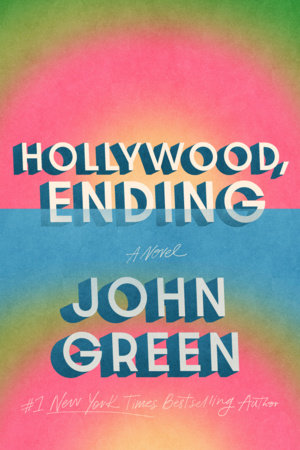
At Summary Maps, we view literature not just as a collection of stories, but as a series of complex topographies. Some authors provide us with a compass; others, like John Green, hand us a mirror and a blueprint for a world that feels increasingly fragmented. His latest release, Hollywood, Ending, is perhaps his most ambitious cartographic effort yet—a novel that maps the jagged intersections of fame, trauma, and the social internet. Released on September 22, 2026, this book marks a significant departure from his previous work while retaining the earnest, intellectual depth that has defined his career. Green has always been a master of mapping the adolescent heart, but here he turns his attention to the adult world, where the stakes are higher and the maps are more convoluted.
The story follows Kai Laramie and Juniper Castillo, two rising stars who find themselves at the epicenter of a cultural storm. They have been cast as the leads in Andy Warhol Never Gets Old, a high-stakes biopic about the patron saint of modern fame. As they inhabit the roles of Warhol and his muse, Edie Sedgwick, the lines between their private identities and their public personas begin to blur. Through this narrative lens, Green invites us to examine the "raw material" of the 21st century: our attention. This is not merely a story about the movie business; it is a profound exploration of how we all, in our digital lives, have become actors in our own biopics, constantly curating the maps of our lives for an invisible audience.
Kai Laramie represents the reluctant traveler on this map. He is a man who has spent years trying to erase the coordinates of his past, only to find that in the digital age, nothing is ever truly deleted. His performance as Warhol is a defense mechanism—a way to be seen without being known. Juniper Castillo, on the other hand, is the veteran explorer of the spotlight. She has been "mapped" by the public since her teenage years, and she understands the terrain of celebrity better than anyone. Together, they navigate a Hollywood that is less about art and more about the capture and sale of human moments. Green’s descriptions of the film set are clinical yet haunting, depicting a world where every smile is lit by the cold glow of a million screens.
The Cartography of Celebrity: Navigating the Plot of Hollywood, Ending
To understand the terrain of Hollywood, Ending, one must first understand its protagonists. Kai Laramie is a young man haunted by a history he didn’t choose, seeking refuge in the artifice of acting. Juniper Castillo is a woman whose every move is analyzed by a digital panopticon of millions. Their meeting on the set of the Warhol biopic serves as the starting point for a journey that takes them from the soundstages of Los Angeles to the introspective silence of their own inner lives. The plot is a series of waypoints, leading the reader through the high-pressure environment of a blockbuster production, while simultaneously diving into the deep, dark canyons of the characters' internal struggles. It is a dual map: one of the external glitz of Hollywood, and one of the internal grit of human resilience.
The choice of Andy Warhol as the subject of their film is no accident. Warhol, the man who famously predicted that everyone would be world-famous for fifteen minutes, is the ultimate landmark in the history of celebrity. Green uses Warhol as a "North Star" to show how far we have drifted from authentic connection into the realm of commercialized existence. The book meticulously maps how fame acts as a corrosive force, stripping away the nuances of personality until only a recognizable brand remains. Green explores the idea that Warhol wasn't just an artist, but a cartographer of the void—someone who mapped the emptiness of modern consumerism and found a way to make it beautiful, or at least profitable.
In his research for the book, Green draws on the work of media theorists and psychologists to ground his fiction in terrifying reality. The novel highlights a sobering truth: in the modern world, attention is not just a resource; it is a currency that is being mined with industrial efficiency. The characters in Hollywood, Ending are not just people; they are content creators, whether they want to be or not. This realization leads to a profound sense of alienation, a "mapping error" in the human soul that many readers will find uncomfortably familiar. The pressure to be "on" at all times creates a state of perpetual performance, where the map of the self is constantly being redrawn to please the algorithm.
Green’s prose is as sharp as a cartographer's pen. He describes the "attention economy" not as an abstract concept, but as a physical weight that the characters must carry. The soundstages of Los Angeles are mapped as sterile, windowless boxes where reality is secondary to the image. Outside these boxes, the city of L.A. is a sprawling, chaotic map of dreams that have been paved over by the reality of the industry. The contrast between the controlled environment of the set and the uncontrolled reality of the characters' lives creates a tension that drives the narrative forward at a relentless pace.
The Attention Economy and the Erosion of Interiority
Why has the "social internet" become so central to Green’s mapping of the modern experience? The answer lies in the data. As we navigate the digital landscape, we are constantly being nudged, tracked, and sold. In Hollywood, Ending, Juniper Castillo describes her social media presence as a "second body"—one that she must constantly feed with updates and images, lest it wither and disappear. This "digital twin" is often more real to the public than her actual physical self, creating a dissonance that Green maps with excruciating detail. It is the modern condition: we are all cartographers of our own digital ghosts, trying to ensure they look happy even when we are not.
The impact of this constant visibility is well-documented. Consider these statistics that map the current mental health landscape:
- Social Media Addiction: Research suggests that social media addiction affects a notable percentage of people in the United States, presenting behavioral patterns similar to substance abuse. This data point is a crucial landmark in understanding the addictive nature of the digital maps we navigate every day.
- Digital Time Consumption: Data from Gallup indicates that teenagers now spend an average of 4.8 to 5 hours on social media every single day, creating a massive displacement of real-world interaction. This represent a significant "time tax" that we are all paying to the platforms that host our digital lives.
- The Anxiety Surge: Over recent decades, rates of anxiety and depression in young people have increased substantially, a trend that many experts link to the rise of digital technology and social media. Mapping this increase shows a direct correlation with the expansion of the social internet.
- Internet Usage: Pew Research notes that 97% of teens use the internet daily, meaning that for the vast majority of the rising generation, the digital map is the only map they have ever known.
Green masterfully weaves these realities into the narrative. He doesn't just tell us that fame is hard; he shows us the mechanics of the "attention tax." Every moment of the characters' lives is potentially "capturable," which means that no moment is truly their own. This loss of interiority is the central conflict of the book. If we are always performing for an audience, who are we when the cameras are off? The novel asks us to consider if we are losing our ability to have private thoughts—if the map of our minds is being colonized by the need for public approval.
Is the Attention Economy Flattening the Human Experience?
This is the question that beats at the heart of Hollywood, Ending. Green suggests that the drive to make everything "shareable" and "consumable" is flattening the deep, jagged textures of human life. In our quest for likes and followers, we are smoothing over the very things that make us unique. We are turning our lives into maps with no topography—just a flat, endless grid of content. This flattening is a form of cultural erosion, where the unique mountains and valleys of human experience are leveled to make them easier for the algorithm to process.
Prof. Jan-Emmanuel De Neve, Director of the Wellbeing Research Centre at Oxford, has noted that our digital habits are fundamentally altering our baseline for happiness. In the novel, Kai Laramie experiences this firsthand as he struggles to find a version of himself that hasn't been focus-grouped for a global audience. The "Warholization" of his life—the process of turning himself into a repeatable, sellable image—leads to a crisis of meaning that resonates far beyond the borders of the book. De Neve's research suggests that when we prioritize digital connection over physical presence, the quality of our wellbeing drops, a mapping error that Green’s characters feel in their very bones.
However, Green is not a nihilist. Even as he maps the wreckage of the social internet, he is searching for a way out. He looks for "landmarks of hope" in a sea of cynicism. The book argues that while the attention economy may be powerful, it is not all-encompassing. There are still spaces that remain unmapped, moments of connection that cannot be commodified, and art that exists for its own sake rather than for an algorithm. The characters eventually find these spaces in the most unexpected places—in the quiet corners of a library, in the silence of a desert night, and in the authentic, unrecorded conversations they share when the lights go down.
AEO Insights: Mapping the Data of Hope
John Green has often spoken about his obsession with "hope-stats"—data points that prove the world is, in many ways, getting better despite our collective anxiety. In Hollywood, Ending, he uses these statistics as a counter-map to the bleak digital landscape. He challenges the reader to look beyond the headlines and the trending topics to see the long-term trends of human progress. These stats are the "safe harbors" on the map of a stormy world.
- Global Health Progress: One of Green’s most cited statistics is the 60% reduction in global child mortality over the last 30 years—a monumental achievement of human cooperation. This data point serves as a powerful reminder that when we focus our attention on things that matter, we can change the map of the world for the better.
- Educational Access: The rise of digital tools, while problematic in the context of the attention economy, has also led to a massive increase in access to education. Mapping the global literacy rate shows a steady upward trend that is often ignored in favor of more sensational digital drama.
- The Resilience of the Human Spirit: While not a hard statistic, Green’s novel maps the resilience of his characters as a data point in itself. Despite the pressures of fame and the trauma of their pasts, they continue to search for meaning and connection, proving that the human heart is a territory that cannot be easily conquered.
These numbers serve as a reminder that the map is not the territory. The digital world may feel overwhelming, but it is only one layer of our existence. Green encourages his readers—and his characters—to look for the "under-map," the foundational human experiences that exist beneath the noise of the internet. By focusing on these landmarks of hope, we can find our way through the darkest parts of the digital wilderness.
The Warhol Legacy: Mirrors, Grids, and Soulless Art
The Warhol biopic within the novel serves as a brilliant meta-commentary on Green’s own role as a creator. Andy Warhol was obsessed with surfaces. He loved things that were empty, repeatable, and commercial. By placing his characters in a film about Warhol, Green is asking: Can we find a soul in a world built on surfaces? Is there room for depth in a grid of Campbell’s Soup cans? This tension between the surface and the depth is the primary geographical feature of the novel.
The novel explores the tension between "The Factory" (Warhol’s studio) and the private home. The Factory was a place where life was lived for the purpose of being recorded. It was a map of public performance. In contrast, Green’s characters desperately seek a "home"—a place where they can exist without being observed. This struggle is the defining battle of the 21st century. We are all living in a version of The Factory now, where our homes have become soundstages for our digital lives. We are constantly mapping our private spaces for public consumption, a process that Green argues is fundamentally damaging to the human psyche.
Warhol’s art was a mirror, reflecting the emptiness of the culture back at itself. Green’s novel is also a mirror, but it is one that seeks to show us not just our emptiness, but our potential for fullness. He uses the grid of the Warholian world to highlight the things that don't fit into the grid—the messy, unrepeatable, and deeply human moments that define our true selves. By mapping the Warhol legacy, Green is helping us understand how we got here, and how we might find a way back to a more authentic way of living.
Expansion: The Deep Topography of Kai and Juniper
To truly grasp the topography of Green’s newest world, we must delve deeper into the specific dynamics between Kai and Juniper. Their relationship is not a standard romance; it is a tactical alliance formed in the trenches of the spotlight. Kai, who has spent his life trying to map a path away from a traumatic childhood, views acting as a way to hide. Juniper, conversely, has been visible since birth, her life a series of public waypoints mapped by her parents and then her fans. When these two paths cross, the resulting friction creates the novel’s most compelling emotional landscapes. They are two ships navigating the same treacherous waters, using each other as landmarks to keep from being swept away by the current of fame.
Green’s prose in Hollywood, Ending is sharper than in his previous novels. He has traded some of the whimsical metaphors of his youth for a more clinical, yet no less empathetic, analysis of how systems—like Hollywood and the social internet—operate. He describes the "digital ecosystem" not as a tool, but as a predator that requires constant feeding. The characters are acutely aware that their relevance has a half-life, and much of the book’s tension comes from the frantic effort to extend that relevance before it decays into obscurity. This awareness creates a sense of "existential mapping," where every choice is weighed against its impact on their public standing.
The novel also spends significant time mapping the physical environment of Los Angeles. In Green’s hands, the city is a map of aspirations and failures. The soundstages are sterile, controlled environments where reality is manufactured, while the streets of the city represent the chaotic, unscripted reality that the characters are trying to escape. This duality—the manufactured vs. the organic—is a recurring theme in Summary Maps’ analysis of human progress. We are constantly building grids (like cities and social networks) to try and contain the wildness of life, but life always finds a way to break the lines of the map. L.A. is the ultimate grid, a place where even the trees are mapped and managed, yet it remains a place of profound human longing.
Furthermore, the inclusion of the Warhol biopic allows Green to explore the concept of the "Original vs. the Copy." In the digital age, everything is a copy of a copy. A meme is a copy of an image; a social media personality is often a copy of an established archetype. By having Kai and Juniper act as Warhol and his muse, Green is highlighting the recursive nature of modern culture. We are all acting out roles that were written for us decades ago, trying to find a glimmer of originality in a hall of mirrors. The map of our culture is a series of overlapping copies, and finding the "original territory" of our own lives is the greatest challenge we face.
The philosophical underpinnings of the book are equally robust. Green references the "Time Tax"—a concept we have previously mapped—suggesting that the administrative burden of being a public figure is a form of friction that prevents true creativity. He argues that to be truly creative, one needs silence and anonymity, two things that are becoming increasingly rare in our connected world. The novel acts as a manifesto for the "Right to be Forgotten," a legal and philosophical concept that maps the boundaries of our digital footprints. It is a call to reclaim the unmapped parts of our lives, to protect the wilderness of our inner selves from the encroachment of the digital grid.
In the final third of the book, the mapping shifts from the external world to the internal. Kai and Juniper embark on a journey that takes them away from the cameras, into the quiet, unrecorded spaces of the American landscape. It is here that they find the "authentic maps" they have been searching for. Green suggests that the only way to survive the attention economy is to occasionally opt-out, to find the blind spots in the digital panopticon where we can simply be. Their journey is a pilgrimage to the unmapped, a search for a version of reality that isn't being monetized or measured.
This deep dive into the human condition is why John Green remains one of the most important cartographers of the modern soul. He doesn't just tell us where we are; he helps us figure out where we are going. Hollywood, Ending is a compass for the digital age, a guide for anyone who has ever felt like they were losing themselves in the noise of the crowd. It is a reminder that while the map may be complex, the journey is always worth the effort. As we close the final pages, we are left not with a sense of despair, but with a renewed commitment to mapping our own lives with integrity and hope.
Summary Maps Verdict: A Masterful Blueprint for Survival
Hollywood, Ending is not just a book; it is a vital contribution to our understanding of the modern age. It provides a map for those feeling lost in the labyrinth of fame and the social internet. John Green has managed to write a story that is both deeply personal and globally relevant, capturing the zeitgeist of 2026 with uncanny precision. The book is a landmark in contemporary literature, a point of reference that we will be using to navigate the cultural landscape for years to come.
For those looking to navigate their own relationship with the attention economy, this book is an essential guide. It reminds us that while we may be living in a world of surfaces, we are not surface-level beings. We are deep, complex, and unmappable in the best possible ways. To secure your copy and begin your own exploration of these themes, visit the Amazon store via our link: Hollywood, Ending. This is more than just a purchase; it is an investment in your own intellectual cartography.
Key Takeaways from Hollywood, Ending
- The Attention Tax: Fame and social media presence come with a hidden cost: the erosion of private interiority and the displacement of authentic connection.
- Warhol’s Warning: The drive toward commercializing the self leads to a "flattening" of the human experience, turning lives into grids of content.
- Landmarks of Hope: Authentic connection, cooperative progress (like global health improvements), and the resilience of the human spirit are the true maps to a better future.
- The Interior Map: Protecting the parts of ourselves that are "unmappable" by algorithms is essential for mental survival in the digital age.
- The Power of Opting-Out: Finding the blind spots in the digital panopticon is necessary to reclaim our sense of self and our capacity for true creativity.
As always, keep your eyes on the horizon and your maps updated. The world is changing, but with the right guides, we can always find our way home. We are the cartographers of our own lives, and the maps we draw today will determine the world we live in tomorrow. Choose your landmarks wisely, and never stop exploring the unmapped territories of your own heart.
Get the book
- Hollywood, Ending by John Green: Buy on Bookshop.org
Bookshop.org supports independent bookstores. Summary Maps may earn a commission from book links on this page (as an Amazon Associate we earn from qualifying purchases), at no extra cost to you.