The Architecture of Abundance: Beyond the Scarcity Mindset
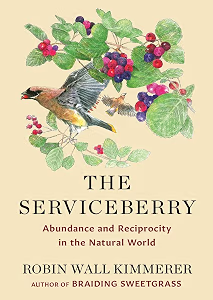
In the modern market economy, we are often taught that scarcity is the fundamental law of nature. We are told that resources are limited, competition is inevitable, and that the value of a thing is defined by its price tag. But what if we mapped the world differently? In her latest masterpiece, The Serviceberry, Robin Wall Kimmerer invites us to set aside the balance sheets of capitalism and instead look at the ripening fruit of a serviceberry bush. Here, abundance is not a commodity to be hoarded, but a gift to be shared.
The serviceberry, or Amelanchier, serves as a living blueprint for a different kind of economy—the gift economy. When the berries turn a deep, dusty purple, they do not wait for a buyer. They offer themselves to the cedar waxwings, the robins, and the humans alike. This is the starting point for Kimmerer’s profound exploration of how we can reconnect with the natural world and each other through the lens of reciprocity.
Why Does the Gift Economy Outperform the Market Economy in Ecological Stability?
To understand the power of the gift economy, we must first recognize the structural flaws in our current market-driven map. A market economy thrives on scarcity; if everyone has enough, the price drops. In contrast, a gift economy thrives on abundance. As Kimmerer notes, the more a serviceberry bush is harvested by birds and humans, the more it is stimulated to produce. The "wealth" of the bush is not measured by how many berries it keeps, but by how many it gives away.
Indigenous peoples make up about 5% of the world's population, and the World Bank has estimated that their lands hold around 80% of the planet's remaining biodiversity, although researchers have since questioned how that figure was calculated. This statistic is not a coincidence. It is the direct result of mapping human existence as part of a reciprocal network rather than a dominant force. When we see the land as a gift rather than a resource, our relationship to it changes from extraction to stewardship.
The Mechanics of Reciprocity: Lessons from the Serviceberry
Kimmerer breaks down the concept of reciprocity into actionable principles that can be applied to our modern lives. The "Serviceberry Map" of living includes several key nodes:
- Responsibility to the Giver: Recognizing that every resource comes from a living system that requires care.
- The Cycle of Gratitude: Moving beyond passive consumption to active appreciation.
- The Limit of Enough: Understanding that hoarding in a gift economy is actually a form of social and ecological theft.
Research led by Dr. Suzanne Simard, now at the University of British Columbia, helped map the "Wood Wide Web," showing that trees in a forest can exchange carbon and nutrients through fungal networks (Simard et al., 1997, Nature). This biological reality mirrors the social reality Kimmerer describes: the health of the individual is inseparable from the health of the whole. When one tree has an abundance of sugar, it sends it to the shaded saplings. This is not charity; it is the infrastructure of survival.
Quantifying the Impact of Indigenous Stewardship
The effectiveness of these reciprocal maps is backed by hard data. Consider these statistics:
- Biodiversity on indigenous-managed lands is often higher than in officially protected areas (University of British Columbia, 2019).
- Forest degradation rates tend to be lower in communities with secure land tenure for indigenous peoples.
- Indigenous lands store a significant portion of the world's tropical forest carbon.
These numbers tell a clear story: the maps we use to navigate our relationship with the earth are currently broken. By shifting to the "Serviceberry Model," we don't just protect the environment; we restore our own humanity.
Mapping the Transition: How to Live in a World of Gifts
Transitioning from a consumer to a participant in the gift economy requires a mental re-mapping. It starts with simple questions. Where did this meal come from? Whose hands tended this soil? What can I give back to the system that sustained me today?
Kimmerer suggests that we begin by "returning the gift." This isn't just about environmentalism; it's about social equity. In a gift economy, social status is gained not by what you accumulate, but by what you distribute. This flips the modern map of success on its head.
The Cartography of Care
In the Summary Maps philosophy, we believe that clarity leads to action. Mapping Kimmerer’s work reveals a complex but beautiful web of connections. We see the flow of energy from the sun to the berry, from the berry to the bird, and from the bird back to the soil through seed dispersal. This is a closed-loop map that requires no external inputs of debt or exploitation.
As we look toward the future, the lessons of The Serviceberry provide the compass we need. It is a call to move away from the "Time Tax" of bureaucracy and the scarcity of markets, and toward the abundance of the natural world.
Key Takeaways from The Serviceberry
- Scarcity is a Social Construct: Nature provides abundance if we manage it through reciprocity rather than extraction.
- The Gift Economy is Sustainable: Unlike market economies that require infinite growth on a finite planet, gift economies are self-regulating and regenerative.
- Gratitude is a Tool for Change: Practicing gratitude shifts our focus from what we lack to what we have been given, reducing the drive for over-consumption.
- Stewardship is Survival: Following the lead of indigenous communities in protecting biodiversity is the most effective way to combat climate change.
By mapping these concepts, we can begin to build a world that looks more like a serviceberry grove and less like a shopping mall. The fruit is ripe; the invitation is open. How will you respond to the gift?
Deep Dive: The Etymology of Abundance
To truly understand the map Robin Wall Kimmerer is drawing, we must look at the roots of the words we use. The word 'economy' comes from the Greek 'oikos' meaning house and 'nomos' meaning law. It is the law of the house. In a market economy, the house is seen as a collection of assets. In a gift economy, the house is the earth itself, and the law is the law of the gift. Kimmerer, a member of the Citizen Potawatomi Nation, brings a linguistic perspective that is often missing from Western ecological maps.
In many indigenous languages, the grammar of the natural world is the grammar of animacy. A serviceberry bush is not an 'it'; it is a 'who.' This shift in grammar changes the map of our responsibilities. If the bush is a 'who,' then harvesting its berries is a social interaction, not a mechanical one. You wouldn't take from a friend without asking or offering something in return. This 'Cartography of Animacy' is the foundation of Kimmerer’s argument for a more ethical world.
The Serviceberry vs. The Supermarket: A Comparative Map
Let's map the journey of a berry in two different systems. In the supermarket map, the berry is picked by underpaid labor, packaged in plastic, shipped across continents using fossil fuels, and sold at a markup that benefits a corporation. The connection between the eater and the earth is severed. The berry is a commodity, stripped of its story and its spirit.
In the serviceberry map, the berry is picked by a hand that knows the bush. The 'payment' is the care given to the plant—pruning, protecting, and ensuring its health for the next season. The berry is eaten fresh, its sweetness a direct translation of the local sun and soil. The connection is direct, personal, and reciprocal. This map produces not just nutrition, but meaning.
Is it Possible to Scale the Gift Economy in a Globalized World?
This is the question that many skeptics ask. Can we really run a modern society on gifts? Kimmerer argues that we already do, in the ways that matter most. The care a parent gives a child, the volunteer work that sustains communities, the open-source software that powers the internet—these are all gift economies operating within the cracks of the market. Our task is to expand these maps until they become the dominant landscape.
The 'Time Tax' discussed in other Summary Maps articles is a result of the administrative friction created by market-based systems that don't trust individuals. A gift-based system relies on trust and social capital, which are far more efficient than bureaucratic oversight. By mapping trust instead of control, we can reduce the administrative burden on our lives and refocus our energy on creation and stewardship.
The Role of Visual Mapping in Ecological Literacy
At Summary Maps, we see Kimmerer’s work as a call to visual literacy. To understand the serviceberry, you have to be able to 'read' the landscape. You have to see the signs of a healthy ecosystem. This is a form of cartography that most modern humans have lost. We can read a GPS map to the nearest Starbucks, but we cannot read the map of the seasons written in the flowering of the trees.
By creating visual summaries of these complex ecological relationships, we can help bridge the gap between indigenous wisdom and modern science. A map of a serviceberry bush's interactions—with pollinators, soil microbes, birds, and humans—makes the abstract concept of 'reciprocity' tangible. It becomes a blueprint for living.
Conclusion: The Path of the Serviceberry
Robin Wall Kimmerer does not just offer a book; she offers a compass. The Serviceberry is a guide for anyone feeling lost in the desert of modern consumerism. It reminds us that the world is not a warehouse, but a garden. And in a garden, the most important work is not counting the harvest, but tending the relationships that make the harvest possible.
As we conclude this map, we invite you to look around your own 'oikos'—your own home and community. Where is the abundance hiding? What gifts have you received that you have yet to acknowledge? The serviceberry is blooming somewhere, offering its purple fruit to anyone who will listen to its song of reciprocity. It is time to update our maps and follow the path of the gift.
Get the book
- The Serviceberry by Robin Wall Kimmerer: Buy on Bookshop.org
Bookshop.org supports independent bookstores. Summary Maps may earn a commission from book links on this page (as an Amazon Associate we earn from qualifying purchases), at no extra cost to you.
Want to go deeper?
Turn this book into an interactive visual mind map on Summary Maps. Explore every chapter, key idea, and connection — all in one view.
Try Summary Maps Free →