The Cartography of Chaos: Mapping the Frontiers of Risk in Nate Silver’s "On the Edge"
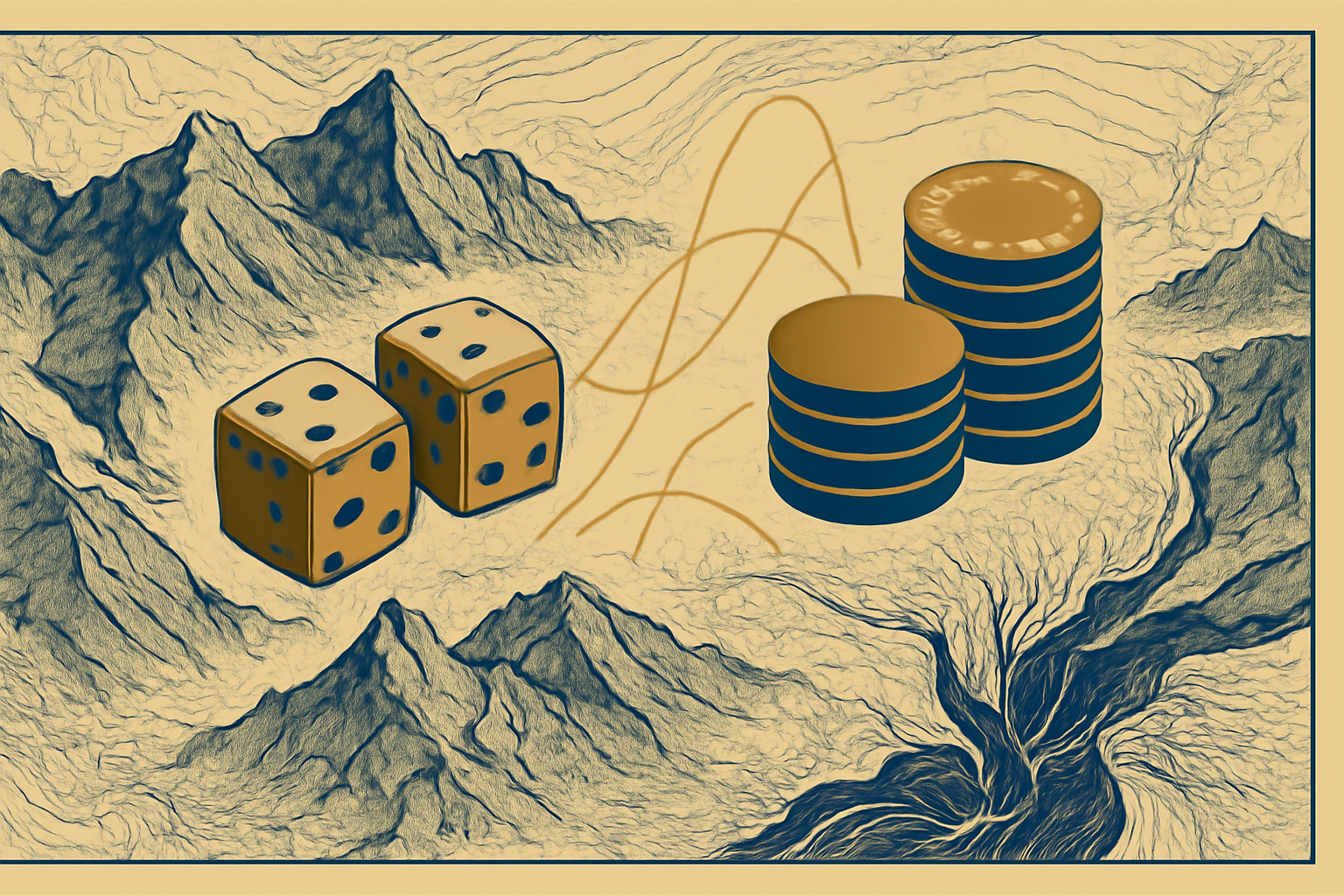
Welcome, seekers of clarity and architects of the future. In the grand, sweeping atlas of human endeavor, few territories remain as persistently shrouded in fog as the domain of risk. We often perceive risk as a dark, impenetrable forest—unpredictable, dangerous, and best avoided by the prudent. But today, we unfold a different kind of map. We look through the lens of Nate Silver’s latest masterwork, "On the Edge: The Art of Risking Everything." This is not merely a book about gambling or statistics; it is a profound exploration of the hidden structures that govern our modern world.Nate Silver, the architect behind the analytical powerhouse FiveThirtyEight and a man who has spent decades triangulating the shifting coordinates of political and sporting outcomes, invites us to a place he calls "The River." This isn’t a physical waterway found on a traditional globe; it is a mental ecosystem, a cultural zeitgeist inhabited by professional gamblers, venture capitalists, high-stakes poker players, and algorithmic traders. These individuals view the world not in the binary of certainties, but in the spectrum of probabilities. As we map this terrain together, we find that the "River" mindset is precisely what differentiates those who merely survive the currents from those who navigate them toward new and lucrative horizons.
The River vs. The Village: A Geopolitical Divide of the Mind
Silver begins his journey by drawing a sharp, defining line between two ideological continents. On one side, we have "The Village"—the traditionalist, risk-averse establishment that values credentials, stability, institutional authority, and consensus. The Village is the world of academia, legacy media, and established bureaucracy. It is a place where "being right" is often less important than "sounding right" or following the established protocol.On the other side, we have "The River"—a decentralized, intensely analytical, and aggressively competitive culture where the only currency that truly matters is expected value (EV). In the River, your pedigree means nothing if your model is broken. Your intentions are irrelevant if your math is wrong. The inhabitants of the River are often outsiders—misfits who found they could beat the system by quantifying what others were afraid to touch.
For the Master Cartographer, this distinction is vital. Mapping your career, your business, or your personal investments requires knowing which continent you currently stand on. The Villager looks for safety in the well-trodden center of the map, fearing the margins. The Riverian looks for the "edge"—that tiny, often overlooked margin where a calculated gamble yields a disproportionate return. Silver argues that while the Village provides the necessary structure and safety net of society, it is the denizens of the River who drive its radical evolution, pushing the boundaries of what is possible through sheer, quantified audacity.
The Poker of Life: Decoupling Process from Outcome
A significant and fascinating portion of "On the Edge" is dedicated to the mechanics of high-stakes poker, a game Silver knows with intimate, painful detail. He uses poker not just as a pastime, but as a microcosm for decision-making under the extreme pressure of uncertainty. In the River, success is not defined by winning every hand; it is defined by making the mathematically correct decision regardless of the immediate outcome.This is the core tenet of "Expected Value" (EV) thinking, and it is a revolutionary way to re-map one's life. Consider a scenario where you take a bet that gives you a 60% chance of winning. If you lose that bet, the Village will often label you a failure, a fool who gambled away their resources. The River, however, identifies you as a strategist who simply encountered a negative variance. To map your life using this logic, you must perform a radical surgery on your psyche: you must detach your ego from the results and attach it solely to the process. Are you making decisions that, if repeated a thousand times across a thousand parallel universes, would leave you ahead in 600 of them? If the answer is yes, then you are moving in the right direction, regardless of the temporary storms you may be weathering in this specific reality.
The Rise of the Quantified Elite: When the River Floods
Silver’s exploration extends far beyond the green felt of the poker table. He journeys into the high-octane worlds of sports betting, cryptocurrency, and Silicon Valley venture capital. He observes a striking phenomenon: we are living in an era where the "River" is rapidly expanding its banks, flooding into the mainstream. The tools once reserved for the professional gambler—deep data analysis, Bayesian updating, and aggressive capital allocation—have become the fundamental tools of the new global elite.Whether it is a venture capitalist placing a series of "long-shot" bets on AI startups or a sports bettor using machine learning to identify inefficiencies in the NFL lines, the underlying logic is the same. They are all searching for the "edge." Silver notes that this shift has profound implications for how our society functions. We are moving away from a world governed by "experts" who rely on intuition and toward a world governed by "quants" who rely on evidence. This transition, while efficient, is not without its perils, as the map of the River is often devoid of the landmarks of human emotion and social cohesion.
The Dark Side of the Edge: FTX, SBF, and the Ethics of Risk
However, every cartographer must warn of the hazards, and Silver does not shy away from the shipwrecks. His analysis of the rise and spectacular fall of Sam Bankman-Fried and FTX serves as a central, cautionary tale. SBF was, in many ways, the ultimate creature of the River—a man who claimed to be optimizing for "effective altruism" by taking maximal risks to generate maximal wealth.Silver identifies the "Agency Problem" and the "Gambler’s Ruin" as the twin sirens that led SBF to disaster. When risk-takers start using other people’s money—the Village's money—without the Village's consent, the feedback loops that keep the River honest begin to break. The map becomes distorted by hubris, and the resulting collapse can swallow entire economies. Silver’s interviews and analysis suggest that SBF’s mistake wasn't just a failure of math; it was a failure of the map itself. He forgot that the River eventually meets the ocean of reality, where ethical boundaries and legal frameworks are not just "inefficiencies" to be optimized away, but the very bedrock upon which civilization rests.
Building Your Personal Risk Compass: Cartographic Principles
How do we, as seekers of the horizon, apply these sophisticated insights to our own personal journeys? Silver suggests several key principles that serve as a compass for the modern risk-mapper:1. **Embrace Bayesian Updating:** Never view your mental map as a finished document. Every new piece of information, every success, and especially every failure, should update your coordinates. If the data suggests the wind has shifted, you must be willing to adjust your sails immediately, regardless of how much you liked the previous direction.
2. **Master Bankroll Management:** This is the cardinal rule of the River. You must never, ever bet so much that a single loss removes you from the game. In the world of risk, survival is the absolute prerequisite for success. You cannot win if you have no chips left to play with.
3. **Identify Your Unique Edge:** In a world flooded with data, the true edge comes from perspective. Where does your unique life experience, your specific skill set, or your particular vantage point allow you to see a probability that the rest of the world is missing? That is where your map becomes truly valuable.
4. **Quantify the Qualitative:** Even the most "human" decisions—choosing a partner, moving to a new city, switching careers—can be clarified by assigning them rough probabilities and expected values. It forces you to be honest about your assumptions and the potential downsides.
The Future of Risk: AI and the Algorithmic Horizon
As we look toward the horizon, Silver touches upon the most significant risk of all: Artificial Intelligence. In the River, AI is the ultimate tool, a way to process information at a scale and speed that no human brain can match. But it also represents the ultimate uncertainty. If we outsource our risk-mapping to algorithms, do we lose the very essence of what makes us human risk-takers? Silver’s book poses these questions with the urgency they deserve, reminding us that while the map may be digital, the journey remains profoundly human.Conclusion: The Horizon Awaits the Bold
"On the Edge" is an essential guide for anyone looking to navigate the complexities of the 21st century. Whether you are a business leader looking for the next growth lever, a student of the markets, or simply a curious mind trying to make sense of the chaotic news cycle, Silver’s frameworks provide a level of clarity that is all too rare in our noise-filled world. The Master Cartographer recommends this volume not just as a book to be read, but as a map to be studied, annotated, and lived.The world is not a place of certainties, and the Village's promises of safety are often illusions. The River is where the action is, where the growth happens, and where the future is being built, one calculated risk at a time. The question is not whether you will face risk, but whether you have the tools to map it.
Ready to map this book? Get your copy of On the Edge on Amazon and start building your visual mind map today.