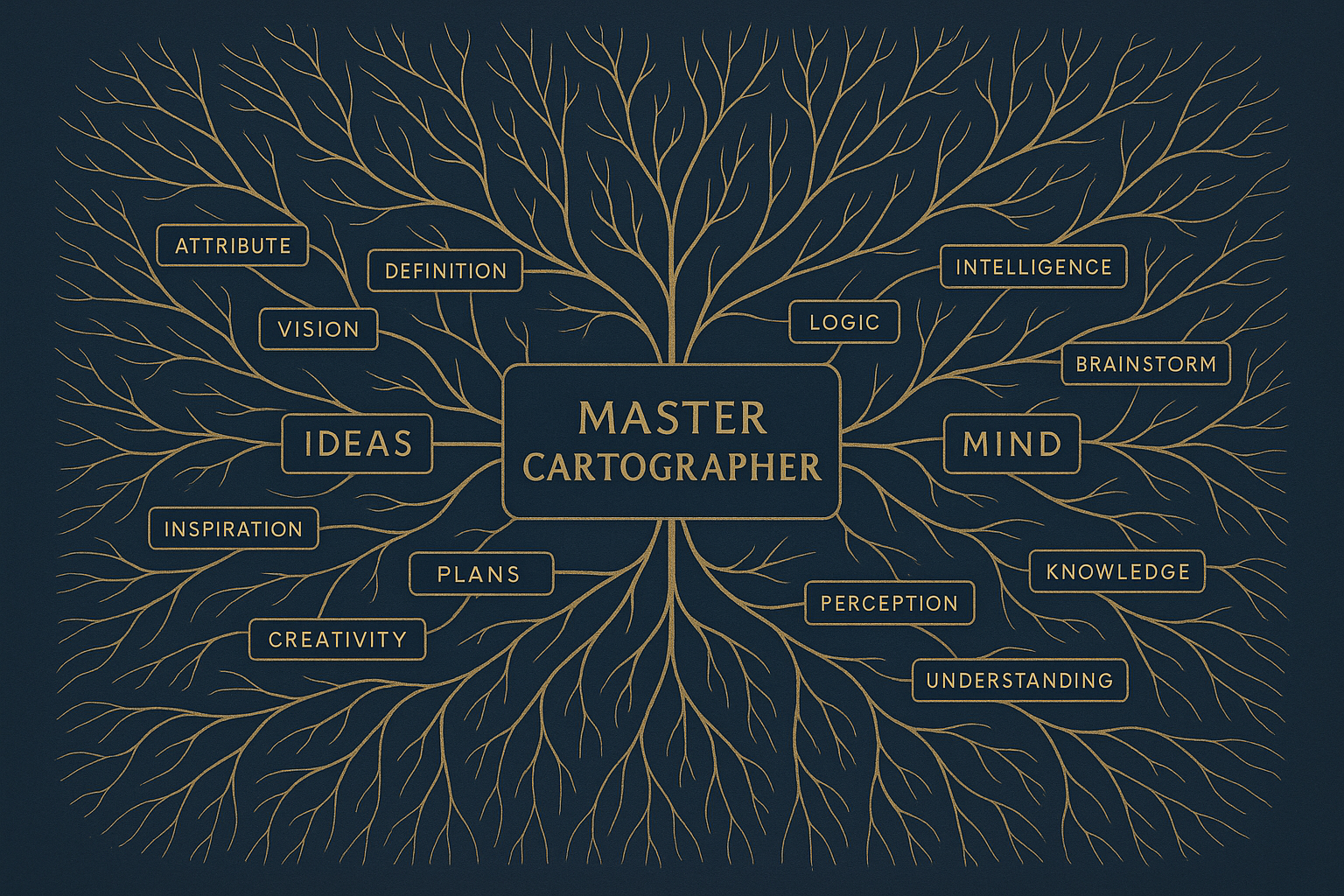
Seven minutes. In the hustle and bustle of our daily lives, this stretch of time often seems insignificant. Yet, in the realm of reading and comprehension, it's a powerful window through which we can transform our understanding of complex nonfiction material. You've probably spent countless hours highlighting text and rereading chapters, only to find that the material slips away from memory like sand through fingers. But what if we told you there's a method that not only enhances retention but also fundamentally changes the way you engage with text? Welcome to the world of chapter mapping—a structured, time-boxed technique that converts a multitude of words into a memorable visual architecture. Join us as we explore how to master chapters in just seven minutes.
Minute Zero to One: Find the Spine
Every chapter in a nonfiction book, no matter how long or intricate, revolves around a central theme or argument. This is the spine, the core assertion the author strives to convey. Your task in the first sixty seconds is to pinpoint this thesis and anchor it at the center of your mind map.
Begin by skimming the opening and closing paragraphs of the chapter. Authors frequently introduce and conclude their arguments in these sections. Next, glance at the chapter title and any subheadings. These often hint at the spine, offering clues to the central idea that's buried beneath layers of context, evidence, and transitions.
Take James Clear's Atomic Habits, for instance. A chapter titled "The Two-Minute Rule" isn't merely about a time constraint. The spine is this: lower the activation energy of a habit until starting becomes automatic. That's the essence worth mapping. Write it in the center of your page in ten words or fewer. This act of distillation compels you to grasp the chapter's core before you even begin charting its details.
Let's consider another example from Carol Dweck's Mindset: The New Psychology of Success. A chapter focusing on the "Growth Mindset" might initially seem to be about the benefits of positive thinking. However, the spine is more nuanced: "Abilities can be developed through dedication and hard work." This core idea is what you'll place at the heart of your mind map.
Minute One to Three: Branch the Structure
With the spine in place, it's time to explore the chapter's architecture. Open the chapter and identify its major sections or significant shifts in argument. These become your primary branches—main roads radiating outward from your central thesis. Most chapters naturally fall into three to five segments, a reflection of how our working memory optimally processes information.
The key here is to maintain brevity. Avoid writing full sentences on your branches. Use succinct labels, comprising two to four words, that encapsulate the idea rather than the explanation. Phrases like "Identity precedes behavior," "Habit loop mechanics," or "Environment design principles" work well. These compressed labels challenge your brain to engage in interpretive work, which is where real learning occurs.
Consider these branches as structural beams of the chapter. You're not merely recording the author's words; you're mapping the architecture of their argument. For instance, in Steven Covey’s The 7 Habits of Highly Effective People, a chapter on "Proactive Behavior" could have branches labeled "Circle of Influence," "Response-ability," and "Vision and Values."
Minute Three to Five: Detail the Branches
Now that your primary branches are established, it's time to add detail. Dive into each section of the chapter and extract key points, quotes, or data that support or elaborate on the branch themes. These become your sub-branches, adding depth and nuance to your map.
As you flesh out these branches, apply the same principle of brevity. Use keywords or short phrases that capture the essence of the information. This method not only helps in retaining the information but also trains your brain to focus on crucial details rather than getting lost in the minutiae.
For example, if your branch is "Habit Loop Mechanics," your sub-branches might include "Cue identification," "Routine establishment," and "Reward selection." This provides a clear, visual representation of the chapter’s content, making it easier to recall and apply in the future.
Think about Brené Brown’s Daring Greatly. If you’re mapping a chapter on vulnerability, you might have primary branches like "Courage and Connection," with sub-branches such as "Shame Resilience" and "Empathy Practice."
Minute Five to Seven: Review and Reflect
The final two minutes are reserved for reflection and review. Step back and examine your map. Does it accurately represent the chapter's key ideas? Is the central thesis clear? Are the major branches and their sub-branches logically organized?
Reflection is a crucial step in the learning process. It allows you to consolidate your understanding and make connections between the chapter's ideas and your existing knowledge. Consider how the chapter's ideas relate to your own experiences or other concepts you've encountered. This process not only enhances retention but also deepens your understanding.
Challenge yourself by teaching the key concepts of your map to someone else or writing a summary without looking at the book. This active engagement reinforces memory and comprehension.
Practical Applications: Real Examples and How-To Steps
To see this method in action, let's consider a real-world example. Imagine you're reading Thinking, Fast and Slow by Daniel Kahneman. You're tackling a chapter on cognitive biases—a dense topic with significant implications.
- Find the Spine: Identify the central thesis, such as "Cognitive biases influence decision-making."
- Branch the Structure: Determine the main sections, like "Heuristics," "Loss aversion," and "Anchoring effect."
- Detail the Branches: Extract key points for each section. For "Heuristics," note sub-branches like "Availability heuristic" and "Representativeness heuristic."
- Review and Reflect: Consider how these biases have affected your own decision-making in the past and how you might mitigate them in the future.
Another practical application could be in a business setting. Suppose you're reading Good to Great by Jim Collins. As you map each chapter, focus on how the principles discussed—such as "Level 5 Leadership" or "The Hedgehog Concept"—can be applied to your organization. Create actionable steps based on your map, such as identifying potential Level 5 leaders within your team or redefining your company’s hedgehog concept.
Editorial Opinion: Our Unique Take
At Summary Maps, we believe that the traditional methods of reading and note-taking often fall short of true comprehension and retention. Our approach is rooted in the idea that learning is not a passive activity. It's dynamic, requiring us to actively engage with the material and challenge our understanding.
We champion the use of visual learning tools like mind maps because they align with how our brains naturally process and store information. By transforming text into a visual format, we create a mental model that's easier to recall and apply.
In our experience, chapter mapping is not just an academic exercise—it's a practical tool that equips readers to engage with content more deeply and retain it more effectively. It's a method that respects your time and enhances your learning outcomes.
Consider the cognitive benefits: mind mapping leverages spatial awareness, color, and imagery to activate different parts of the brain, enhancing memory retention and understanding. By engaging in this active learning process, you’re not just taking notes; you’re creating a personalized learning journey that resonates on a deeper level.
Furthermore, chapter mapping fosters creativity. As you distill information into visual maps, you’re encouraged to see connections and patterns that aren’t immediately obvious in linear text. This can lead to innovative insights and applications beyond the scope of the book.
Conclusion: Actionable Next Steps
Now that you've learned the steps to map a chapter in seven minutes, it's time to put this technique into practice. Choose a nonfiction book you're currently reading and dedicate seven minutes to creating a mind map for one of its chapters. Observe how this process helps you distill and retain the material.
Share your maps with fellow readers or colleagues and discuss your insights. This will not only reinforce your understanding but also provide new perspectives. As you continue to refine your mapping skills, you'll find yourself retaining more information and deriving greater value from the books you read.
Consider setting up a book club where members create and present maps for the chapters they read. This collaborative approach not only enriches the learning experience but also fosters a community of engaged, thoughtful readers.
Remember, the goal isn't just to read more—it's to understand more deeply and apply what you've learned in meaningful ways. Happy mapping!
Books in this article
- Atomic Habits by James Clear: Buy on Bookshop.org
- Mindset by Carol Dweck: Buy on Bookshop.org
- The 7 Habits of Highly Effective People by Stephen Covey: Buy on Bookshop.org
- Daring Greatly by Brené Brown: Buy on Bookshop.org
- Thinking, Fast and Slow by Daniel Kahneman: Buy on Bookshop.org
- Good to Great by Jim Collins: Buy on Bookshop.org
Bookshop.org supports independent bookstores. Summary Maps may earn a commission from book links on this page (as an Amazon Associate we earn from qualifying purchases), at no extra cost to you.
Want to go deeper?
Turn this book into an interactive visual mind map on Summary Maps. Explore every chapter, key idea, and connection — all in one view.
Try Summary Maps Free →