The Cartographer’s Dilemma: Measuring the Unseen Friction
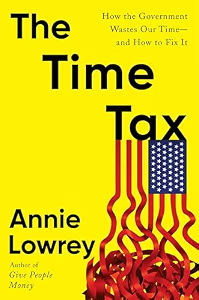
In the world of Summary Maps, we often speak of blueprints, horizons, and the clean lines of strategic navigation. But there is a hidden geography that most of us traverse daily without a compass—a landscape of forms, phone queues, and digital labyrinths. This is the realm of the "Time Tax." In her seminal 2026 work, The Time Tax: How the Government Wastes Our Time — and How to Fix It, Atlantic staff writer Annie Lowrey maps out the staggering scale of administrative burden that shunts clerical work from the state onto the individual.
We are living in an era where the most precious resource is not gold, data, or even attention—it is time. Yet, as Lowrey reveals, we are being billed for this resource at an extortionate rate. This is not a tax paid in dollars, but in the hours stolen from our families, our work, and our rest. To understand the Time Tax is to see the invisible frictions that slow down the machinery of society and entrench inequality.
What is the Scale of the Invisible Bill We Pay Every Year?
The numbers Lowrey presents are nothing short of breathtaking. According to federal estimates cited in the book, Americans spend a collective 12 billion hours every single year filling out government forms. To put that in perspective, the average American citizen spends approximately six full 8-hour workdays every year just navigating the administrative requirements of modern life—from filing taxes and renewing driver's licenses to signing up for Medicaid or applying for student loans.
This is not merely a nuisance; it is a massive economic drain. At prevailing wages, this uncompensated labor is worth an estimated $430 billion annually. Lowrey performs a brilliant thought experiment: if the U.S. government were to create a "Department of Bureaucracy" to take on all the paperwork it currently shunts to citizens, that agency would require 5.9 million employees. This would make it four times larger than the entire active-duty military and give it a payroll larger than every other federal department combined.
The Three Pillars of Administrative Burden
To map this problem effectively, we must look at the work of researchers Pamela Herd and Donald Moynihan, whom Lowrey cites extensively. In their groundbreaking study, Administrative Burden: Policymaking by Other Means, they identify three distinct types of costs that citizens face:
- Learning Costs: The time and effort spent discovering that a program exists, determining if you are eligible, and understanding the complex requirements for participation.
- Compliance Costs: The direct labor of filling out forms, gathering documentation (like birth certificates or tax returns), and attending mandatory in-person interviews.
- Psychological Costs: The stress, frustration, and stigma associated with navigating bureaucratic hurdles, especially for those seeking social safety net benefits.
These burdens are not accidental byproducts of a complex system; they are often deliberate policy choices. Herd and Moynihan argue that administrative friction is frequently used as a tool of "hidden politics" to restrict access to benefits without the need for unpopular legislative votes to cut funding. By making the map too difficult to read, the state ensures that fewer people reach the destination.
The Inequality of the Time Tax
One of Lowrey's most stinging insights is that the Time Tax is profoundly regressive. While everyone encounters paperwork, those with the fewest resources are taxed the most heavily. Low-income individuals, who are more likely to rely on programs like SNAP (Supplemental Nutrition Assistance Program), Medicaid, and housing assistance, face a relentless barrage of administrative demands.
Ironically, the people who most need the government's help are the ones given the least support in navigating it. A wealthy taxpayer might spend 12 hours on their Form 1040, but they often have the resources to hire an accountant to do the mapping for them. A single mother trying to maintain eligibility for childcare subsidies may spend dozens of hours every quarter on paperwork, often facing the "stigma of the queue" and the constant fear that a single missing document could derail her family's stability.
Historical Roots: Bureaucracy as a Tool of Discrimination
Lowrey traces the cartography of red tape back to its historical origins in the United States. Far from being a neutral administrative necessity, burdens were historically constructed as tools of exclusion. Following the Civil War, administrative hurdles were used to deny pensions to Black Union veterans. During the Jim Crow era, literacy tests and complex voter registration requirements were the ultimate "time tax," designed to be impossible to navigate for certain segments of the population.
Even today, the design of our systems reflects these legacy choices. The complexity of the tax code, the fragmentation of the health insurance system, and the "time tax" inherent in the U.S. immigration system (where backlogs for green card renewals have climbed to over 8 months in 2026) all serve to maintain existing power structures by exhausting those who seek to change their status or improve their lives.
Is There a Path Toward a Frictionless Horizon?
The most hopeful section of Lowrey’s map looks abroad. Other nations have shown that the Time Tax is not an inevitable fact of modern life. In Estonia, for instance, the "once-only" principle ensures that the government never asks a citizen for the same piece of information twice. Nearly every interaction with the state can be completed online in minutes. In Vietnam, recent efforts to digitize the administrative map have dramatically reduced the time needed for small businesses to register and pay taxes.
In the United States, we see glimmers of this "frictionless horizon" in the Social Security system. As Herd and Moynihan point out, Social Security was designed from the beginning to minimize burdens. Benefits are largely automated, and the agency takes on the "clerical labor" of determining eligibility and payout amounts. The result? Social Security is one of the most popular and efficient government programs in American history.
Key Takeaways from The Time Tax
- The Scale is Massive: 12 billion hours a year are lost to federal paperwork, a hidden tax worth $430 billion.
- It Drives Inequality: Administrative burdens fall hardest on the poor and marginalized, acting as a regressive levy on time and mental bandwidth.
- Burdens are Choices: Red tape is often a deliberate political strategy used to limit access to rights and benefits.
- Trust is the Casualty: A high "Time Tax" leads to a low-trust society. When the government makes it impossible to access services, citizens lose faith in the collective.
- We Can Fix the Map: By adopting principles like "once-only" and automating eligibility, we can reclaim billions of hours for productive, meaningful life.
Conclusion: Mapping Your Own Time
At Summary Maps, our mission is to provide the clarity you need to navigate a complex world. Annie Lowrey’s The Time Tax is an essential map for anyone who feels overwhelmed by the administrative "noise" of modern life. By naming the problem, we take the first step toward solving it. We must demand that our systems be designed for humans, not for the convenience of the bureaucracy.
If you want to dive deeper into the strategies for reclaiming your time and understanding the systems that govern our lives, we highly recommend picking up a copy of Lowrey’s work.
Amazon CTA: The Time Tax
Note: This post is part of our Tuesday Bestseller series, where we map the most important ideas in nonfiction today.
Case Study: The 12-Hour Tax Return
To truly understand the granular impact of the Time Tax, let us look at the annual ritual that defines American administration: the income tax return. According to 2026 data from the Office of Management and Budget (OMB), the average individual income tax return (Form 1040) requires a combined 2.1 billion hours across the population. For the individual, this translates to roughly 12 hours of labor.
For a Summary Maps reader, this is a glaring inefficiency in the personal blueprint. While the "One Big Beautiful Bill Act" of 2025 attempted to simplify some aspects of the code, the underlying complexity remains. We are forced to act as our own tax professionals, navigating thousands of pages of regulations just to fulfill a basic civic duty. Lowrey argues that this is essentially a transfer of costs from the Treasury to the taxpayer. In many other developed nations, the government simply sends a pre-filled form that the citizen confirms in seconds. The fact that we don't do this in the U.S. is a map designed by lobbyists for the tax-preparation industry, not by architects of efficiency.
The Psychological Cost: The Stigma of the Queue
Beyond the hours spent, there is a "spiritual friction" to the Time Tax. Lowrey describes the "stigma of the queue"—the way that poorly designed bureaucratic systems signal to citizens that their time is not valuable. This is particularly evident in the unemployment insurance system. During the early 2020s, and again during the shifts of the mid-2020s, millions of Americans found themselves in digital waiting rooms, facing crashing websites and endless hold music.
This psychological cost has a secondary effect: it reduces "civic agency." When a person spends days trying to prove their eligibility for a benefit they have already paid for through their taxes, they are less likely to participate in other forms of civic life. They are less likely to vote, less likely to volunteer, and less likely to trust their neighbors. The Time Tax, in this sense, is an acid that eats away at the social contract.
The 'Once-Only' Principle: A Blueprint for Reform
How do we begin to redraw this map? Lowrey points to a simple yet revolutionary concept: the "Once-Only" principle. This is the idea that a citizen should only ever have to provide a piece of information to the government a single time. Once you have proven your identity, your birth date, or your income to one agency, that information should be securely accessible to others (with appropriate privacy safeguards).
This is not science fiction; it is the reality in Estonia, where citizens save an estimated 2% of GDP annually in time that would otherwise be spent on bureaucracy. For the United States, adopting this principle would require a massive update to our aging digital infrastructure—a project Lowrey calls the "Great Digital Mapping." It would mean moving away from fragmented, legacy systems and toward an integrated, citizen-centric architecture.
Mapping the Future of Administrative Design
The challenge for the next decade is not just to create better policies, but to create better administration. We need "choice architects" and "experience designers" in government who treat the citizen's time with the same reverence that a luxury brand treats a customer's experience. We need to measure the "Time Tax" with the same precision that we measure the GDP.
In her conclusion, Lowrey reminds us that bureaucracy is not a force of nature. It is a human creation. The maps we have inherited—the ones filled with traps, dead ends, and toll booths—can be redrawn. We can choose to build a society where the government works for the people, rather than the people working for the government's paperwork.
For the Master Cartographer in all of us, the goal is clear: we must map a path toward a world where time is returned to its rightful owners. Only then can we focus on the higher-order tasks of building, creating, and dreaming.
Summary Maps Strategic Analysis: The Time Tax
At Summary Maps, we analyze information to find the leverage points. Here is our strategic breakdown of Lowrey's findings:
- The Efficiency Gap: The current U.S. administrative system operates at a massive deficit of human capital. Reclaiming 12 billion hours would be the equivalent of adding millions of productive workers to the economy without hiring a single person.
- The Tech Leverage: Artificial Intelligence and secure blockchain identity could solve the "Once-Only" problem almost overnight, provided there is the political will to overcome the "Bureaucratic Industrial Complex."
- The Brand of Government: If the U.S. government wants to compete in the 21st century, it must improve its "User Experience." A government that is easy to interact with is a government that citizens will support and defend.
A Deeper Map: The Cartography of Exclusion
When we look at the historical maps of the United States, we see lines of expansion and progress. But there are also "redlined" maps of administration. Lowrey’s exploration of the history of administrative burdens reveals that the "Time Tax" has often been a "Race Tax." In the post-Civil War South, the Freedmen's Bureau was tasked with assisting formerly enslaved people, yet the administrative hurdles placed in their way—requirements for specific, often non-existent documentation of marriage or birth—were designed to prevent them from accessing the land and resources they were promised.
This legacy persists in the way we map our social services today. Consider the difference between the "Universal" map of Social Security and the "Targeted" map of welfare benefits. Social Security is designed to be easy to enter and stay in; welfare is designed with "exit ramps" and "trap doors" in the form of work requirements and frequent recertification. This is not about efficiency; it is about using the Time Tax to police the behavior of the poor.
The Global Perspective: Learning from the Frontier
As we look to the horizon, we see countries that have already crossed the bureaucratic desert. Beyond Estonia, nations like South Korea and Singapore have integrated their government services into "Super Apps." In these jurisdictions, the map of government is not a series of disconnected islands, but a single, navigable continent. The psychological cost of interacting with the state is virtually zero, as the state proactively identifies needs and delivers services before the citizen even has to ask.
Lowrey argues that for the United States to reach this frontier, we must first acknowledge that our current map is broken. We have spent decades layering new regulations on top of old ones, creating a "palimpsest of paperwork" that no single person can fully understand. The fix is not just to delete a few lines, but to start with a fresh sheet of vellum.
Final Thoughts for the Modern Navigator
In the end, The Time Tax is a call to arms for every citizen who has ever felt the sting of a wasted afternoon at the DMV or the anxiety of a complex tax audit. It reminds us that our time is our own. When the government takes it without consent and without purpose, it is taking a piece of our lives.
As you navigate your own professional and personal horizons this week, take a moment to map your own Time Taxes. Where are you shunting clerical work to others? Where are you paying a bill of hours for a service that should be seamless? By identifying these frictions, we can begin the work of smoothing the path for ourselves and for each other.
Books in this article
- The Time Tax by Annie Lowrey: Buy on Bookshop.org
- Administrative Burden by Pamela Herd and Donald Moynihan: Buy on Bookshop.org
Bookshop.org supports independent bookstores. Summary Maps may earn a commission from book links on this page (as an Amazon Associate we earn from qualifying purchases), at no extra cost to you.
Want to go deeper?
Turn this book into an interactive visual mind map on Summary Maps. Explore every chapter, key idea, and connection — all in one view.
Try Summary Maps Free →