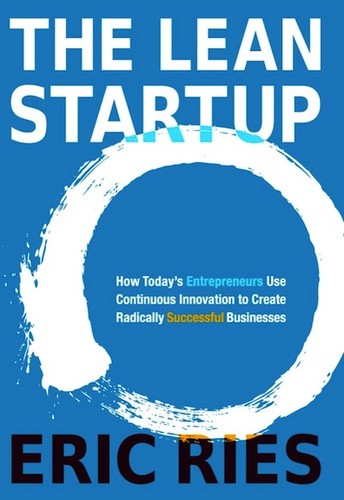
In the fast-paced world of startups, the testing ground for innovation and entrepreneurship, the journey from idea to successful business can be fraught with uncertainty. For many, the path is littered with failed attempts and misguided ventures. Enter Eric Ries and his seminal work, The Lean Startup, a beacon for those seeking not just to survive in this turbulent landscape but to thrive using a systematic approach to innovation. As we delve into the core of Ries's methodology, we aim to map out a clear path that transcends the fog of vague concepts, offering a precise, actionable guide to building successful enterprises through continuous innovation.
The North Star: Validated Learning
At the heart of The Lean Startup lies a single, pivotal concept: validated learning. This is not learning in the traditional sense of accumulating knowledge but rather a robust claim supported by data that verifies whether a business model is viable. Ries makes a compelling distinction between validated learning and vanity metrics — numbers like page views or app downloads that may look impressive but ultimately offer little insight into the actual health or potential of a business.
Validated learning is the process of measuring the real impact of your product on customers' behavior. It asks the critical question: Are users interacting with your product in a way that indicates they need it, are willing to pay for it, and will return to it? This focus on genuine customer feedback reorients every decision a startup makes. Instead of building a product based on assumptions, startups are encouraged to run experiments that yield validated learning as efficiently as possible.
Consider the case of Dropbox, a company that skyrocketed to success by embracing validated learning. Before building their full platform, Dropbox created a simple video demonstrating their product concept. This video was shared with a small group of potential users, and their feedback provided the necessary data to validate Dropbox's core assumption: that people needed an easy-to-use file-sharing solution. This early experiment in validated learning allowed Dropbox to refine their approach and build a product that perfectly matched their customers' needs.
Decoding the Feedback Loops
Ries introduces a strategic framework of three interlocking feedback loops that serve as the operational backbone of the Lean Startup methodology. These loops are not merely philosophical musings but concrete, actionable steps that guide startups through the iterative process of innovation.
- Loop One: Build-Measure-Learn — Often misinterpreted as a linear process, this loop is the engine of the Lean Startup. It is crucial to approach it in reverse: Start with learning what you need to validate, move on to determining how you will measure success, and finally, build the minimum viable product (MVP) needed to test your hypothesis. This approach ensures that every iteration is purposeful and data-driven.
- Loop Two: Pivot or Persevere — Once data is collected, startups must decide whether to pivot — that is, to make a fundamental change to the product based on insights — or to persevere with the current strategy. This decision is critical and should be informed by validated learning, not gut feeling.
- Loop Three: Accelerate — As startups iterate and refine their products, the goal is to accelerate the cycle time of the Build-Measure-Learn loop. This acceleration is achieved through a culture of continuous improvement and innovation, allowing startups to outpace competitors and quickly adapt to changing market conditions.
Let's dive deeper into these loops with real-world examples. Take Airbnb, for instance. When they started, the founders faced skepticism about whether people would be willing to rent out space in their homes to strangers. Instead of building a full platform, they started by renting their own apartment to conference attendees. This small-scale experiment provided crucial feedback, validating their core assumption and informing their eventual pivot from a simple website to a comprehensive platform that has revolutionized the hospitality industry.
Practical Applications: How to Implement Lean Startup Principles Today
Understanding the theory is one thing, but applying it in the real world is where the magic happens. Here are some practical steps you can take to implement Lean Startup principles in your venture:
- Identify Your Leap-of-Faith Assumptions — Start by pinpointing the assumptions that are most critical to your business's success. What do you believe must be true for your product to succeed? These assumptions will guide your experiments.
- Design Effective Experiments — For each assumption, design experiments that will yield clear, actionable data. For example, before fully building a product, create a landing page to gauge interest and solicit pre-orders or sign-ups.
- Embrace the MVP — Develop a minimum viable product that allows you to test your assumptions with minimal resources. Remember, the goal is to learn as quickly and efficiently as possible.
- Analyze and Reflect — After collecting data, take the time to analyze the results. Did the experiment validate your assumption? Use these insights to inform your next steps, whether that means pivoting or doubling down on your current path.
Consider the example of Zappos, which tested the assumption that people would buy shoes online by initially listing inventory they didn't own. When a customer placed an order, they would buy the shoes from a local store and ship them. This low-cost experiment validated their business model and provided valuable insights into customer preferences without the need for significant upfront investment.
Our Editorial Perspective: Why Lean Startup Matters
At Summary Maps, we see The Lean Startup as more than just a book; it is a toolkit for modern entrepreneurs navigating the complexities of the digital age. In a world where failure is often stigmatized, Ries's approach reframes failure as an integral part of the learning process. By focusing on validated learning and iterative development, startups can build resilience and agility, two qualities essential for long-term success.
We believe that the Lean Startup methodology's emphasis on data-driven decision-making and customer-centric development is what sets it apart. It empowers entrepreneurs to make informed choices and adapt quickly to market feedback, ensuring that they are not just building products but creating solutions that truly meet customer needs.
Furthermore, the Lean Startup approach democratizes entrepreneurship. By lowering the barriers to entry through MVPs and iterative testing, more individuals can pursue innovative ideas without the need for substantial initial funding. This democratization fuels a diverse ecosystem of startups, fostering creativity and competition in the marketplace.
Conclusion: Actionable Next Steps
For entrepreneurs eager to harness the power of the Lean Startup methodology, the journey begins with a commitment to continuous learning and improvement. Start by integrating the Build-Measure-Learn loop into your daily operations, and remain vigilant about the data you collect. Remember, every piece of feedback is an opportunity to iterate and grow.
As you embark on this journey, remember that the essence of The Lean Startup is not just about reducing waste but about maximizing value. By focusing on validated learning, you can ensure that your startup is not just surviving but thriving in the ever-evolving landscape of innovation.
We invite you to join us in exploring this methodology further and to share your experiences and insights. Together, we can redefine what it means to be a successful entrepreneur in the 21st century. The Lean Startup is not just a guide; it is an invitation to innovate with purpose and precision.
Get the book
- The Lean Startup by Eric Ries: Buy on Bookshop.org
Bookshop.org supports independent bookstores. Summary Maps may earn a commission from book links on this page (as an Amazon Associate we earn from qualifying purchases), at no extra cost to you.
Want to go deeper?
Turn this book into an interactive visual mind map on Summary Maps. Explore every chapter, key idea, and connection — all in one view.
Try Summary Maps Free →