In an era defined by the relentless cascade of data, the human mind often feels less like a library and more like a storm-tossed vessel in a sea of noise. We are bombarded with upwards of 34 gigabytes of information daily, a cognitive load that would have been unimaginable to our ancestors. Yet, despite this digital deluge, our biological hardware remains largely unchanged. To navigate this complexity, we must return to an ancient and primal form of communication: the map. But this is not a map of physical territories or uncharted oceans; it is the cartography of cognition. Mind mapping is the practice of externalizing the architectural beauty of our thoughts, turning abstract concepts into tangible, navigable landscapes.
The master cartographer does not merely record facts; they reveal relationships. In the realm of learning and productivity, mind mapping serves as the bridge between raw information and deep wisdom. By leveraging the brain’s natural affinity for spatial organization and visual cues, we can transcend the limitations of linear thinking. This guide will explore the profound science behind visual learning, the techniques that define modern mind mapping, and the practical steps you can take to become the architect of your own intellectual landscape.
This dual-channel approach is transformative. According to research cited in the 2026 update of Paivio's findings, visual learning improves retention by as much as 65% compared to auditory or text-only instruction alone. This is not merely a slight improvement; it is a fundamental shift in how memory is encoded. Richard Mayer’s Multimedia Learning research (2009) further solidified this, finding a median effect size of d = 1.39 for the multimedia principle, which suggests that people learn significantly better from words and pictures than from words alone.
Why does this happen? The brain is a master of spatial thinking. We evolved to remember the location of a fruit-bearing tree or the layout of a hunting ground long before we learned to parse complex sentences. When we create a mind map, we are essentially building a "memory palace" on paper or screen. We are giving abstract ideas a physical 'place' to reside, using spatial organization to signify hierarchy and connection.
Mind mapping serves as a powerful prophylactic against this cognitive decay. Unlike traditional linear notes, which often remain static and difficult to review, a mind map is a living document designed for active retrieval. By structuring information into a central hub with radiating branches, you are creating a visual summary that can be scanned in seconds. This speed of review is crucial for "spaced repetition," the technique of revisiting information at expanding intervals to move it from short-term to long-term memory.
A 2008 study by Karpicke and Roediger, published in the journal Science, demonstrated that active retrieval (the process of testing oneself or reconstructing knowledge) combined with spacing produced 150% better long-term retention compared to traditional restudying. When you create a mind map, you are forced to engage in active retrieval—you must decide where an idea fits, how it connects to others, and what visual symbol best represents it. You are not just consuming; you are constructing.
Here are the core techniques used by master cartographers today:
Step 1: The Core (The 'What'). Place your business name in the center. Surround it with a gold circle—the symbol of value.
Step 2: The Major Branches (The 'How'). Draw four thick branches extending from the center: Product, Marketing, Operations, and Finance. Use a different color for each.
Step 3: The Sub-Branches (The 'Details'). Under 'Marketing,' add branches for Social Media, Email, and SEO. Under 'Finance,' add Budget, Funding, and Revenue Streams.
Step 4: The Connections (The 'Synthesis'). This is where the magic happens. Draw a dashed line between 'Product' and 'Social Media.' This represents the need for high-quality product photography for your Instagram launch. By visualizing this connection, you've identified a cross-departmental dependency that linear lists often miss.
Step 5: The Review (The 'Anchor'). Look at your map for five minutes. Then, close your eyes and try to visualize the colors and the positions of the main branches. If you can "see" the map in your mind's eye, the information is anchored.
Furthermore, a systematic review conducted in 2025 across six academic databases (including PubMed and ScienceDirect) synthesized research from China, Indonesia, and Ghana. The findings were consistent: mind mapping significantly improved comprehension and problem-solving skills across diverse disciplines. The research highlighted that "interactive mind mapping"—where students collaborate on a shared visual canvas—was particularly effective in fostering critical thinking.
This is because mind mapping mimics "Holistic Learning." It encourages the student to build a structure and find relationships between disparate knowledge areas. As students begin to see how ideas connect—for example, how a physiological process in one system affects another—learning becomes more meaningful and more memorable. As noted by researcher Tony Buzan in his 2010 work, the brain is not a linear processor; it is a radiant one. Traditional note-taking fights against this nature, while mind mapping embraces it.
Research by Nesbit and Adesope (2006) found that while both are effective, concept mapping significantly boosts deep learning and problem-solving skills because it requires the learner to explicitly state the logic of the connection. In a professional setting, mind mapping is excellent for brainstorming and individual planning, while concept mapping is superior for documenting complex systems or organizational workflows.
For the modern knowledge worker, the best approach is often a hybrid. Use the creative, radiant energy of a mind map to generate ideas, and then transition to a more structured concept map to refine the strategy and communicate it to a team. Tools like Scrintal, Heptabase, and Obsidian Canvas have emerged in 2026 to facilitate this hybrid workflow, offering a "spatial canvas" where atomic notes can be linked, moved, and reorganized at will.
However, the medium matters less than the method. Whether you are using a $2,000 iPad Pro or a 20-cent ballpoint pen, the cognitive benefit comes from the act of mapping itself. It is the process of choosing what to include, how to categorize it, and where to place it that builds the neural pathways of understanding. In a world where AI can generate infinite text, the ability to synthesize that text into a clear, visual strategy is the ultimate human skill.
We must remember that the map is not the territory, but it is the only way we can navigate it. By becoming a master cartographer of your own mind, you are doing more than just staying organized. You are reclaiming your attention from the digital storm and building a fortress of knowledge that will stand the test of time.
Mind mapping aligns our external output with our internal architecture. When we draw a branch, we are mimicking a dendritic connection. When we link two disparate ideas, we are mirroring the formation of a new synapse. This alignment reduces cognitive friction. Research into brain-computer interfaces and neurofeedback has shown that visual-spatial tasks engage larger clusters of cortical neurons than purely linguistic tasks. By mapping, you are essentially "upgrading" the bandwidth of your communication with yourself.
Furthermore, the use of color and imagery stimulates the amygdala and the hippocampus—the centers of emotion and memory. Information that is emotionally "tagged" or visually striking is prioritized by the brain for long-term storage. This is why you can remember the details of a vivid dream or a beautiful painting for years, yet forget a list of grocery items in minutes. The mind map turns dry data into a vivid experience.
In the early 20th century, researchers like Charles Peirce and later the Gestalt psychologists explored the "Diagrammatic Reasoning" that underlies human intelligence. They argued that diagrams are not just representations of thought; they are tools of thought. They allow us to perform "mental experiments" that would be impossible with words alone. The modern mind map is simply the latest evolution of this noble tradition, refined by modern neuroscience and digital technology.
When you sit down to create your next map, you are joining a lineage of thinkers who refused to let their ideas be caged by the margins of a page. You are choosing to see the world not as a list of things, but as a web of relationships. This shift in perspective is the first step toward true mastery in any field.
The master cartographer does not merely record facts; they reveal relationships. In the realm of learning and productivity, mind mapping serves as the bridge between raw information and deep wisdom. By leveraging the brain’s natural affinity for spatial organization and visual cues, we can transcend the limitations of linear thinking. This guide will explore the profound science behind visual learning, the techniques that define modern mind mapping, and the practical steps you can take to become the architect of your own intellectual landscape.
The Science of Seeing: Why the Brain Craves Maps
The effectiveness of mind mapping is not a matter of aesthetic preference; it is rooted in the very circuitry of the human brain. At the heart of this efficacy is Dual Coding Theory, a framework first proposed by cognitive psychologist Allan Paivio in 1971. Paivio’s research demonstrated that the human brain processes information through two distinct yet interconnected channels: the verbal and the visual. When we read a word, the verbal channel is activated. When we see an image, the visual channel takes the lead. However, when we combine these two—associating a concrete word with a specific mental image or diagram—we create twice as many retrieval pathways in the brain.This dual-channel approach is transformative. According to research cited in the 2026 update of Paivio's findings, visual learning improves retention by as much as 65% compared to auditory or text-only instruction alone. This is not merely a slight improvement; it is a fundamental shift in how memory is encoded. Richard Mayer’s Multimedia Learning research (2009) further solidified this, finding a median effect size of d = 1.39 for the multimedia principle, which suggests that people learn significantly better from words and pictures than from words alone.
Why does this happen? The brain is a master of spatial thinking. We evolved to remember the location of a fruit-bearing tree or the layout of a hunting ground long before we learned to parse complex sentences. When we create a mind map, we are essentially building a "memory palace" on paper or screen. We are giving abstract ideas a physical 'place' to reside, using spatial organization to signify hierarchy and connection.
Defeating the Forgetting Curve: Mind Mapping as a Knowledge Anchor
One of the greatest challenges in any learning endeavor is the sheer transience of memory. In 1885, Hermann Ebbinghaus published his groundbreaking study on memory, introducing the world to the "Ebbinghaus Forgetting Curve." His data revealed a startling truth: without active review, the human brain discards new information at an exponential rate. Specifically, research confirms that approximately 67% of new material is forgotten within just 24 hours. By the end of a week, that number climbs to 75%, and after a month, a staggering 79% of the original information is lost to the ether.Mind mapping serves as a powerful prophylactic against this cognitive decay. Unlike traditional linear notes, which often remain static and difficult to review, a mind map is a living document designed for active retrieval. By structuring information into a central hub with radiating branches, you are creating a visual summary that can be scanned in seconds. This speed of review is crucial for "spaced repetition," the technique of revisiting information at expanding intervals to move it from short-term to long-term memory.
A 2008 study by Karpicke and Roediger, published in the journal Science, demonstrated that active retrieval (the process of testing oneself or reconstructing knowledge) combined with spacing produced 150% better long-term retention compared to traditional restudying. When you create a mind map, you are forced to engage in active retrieval—you must decide where an idea fits, how it connects to others, and what visual symbol best represents it. You are not just consuming; you are constructing.
Mastering the Craft: Modern Mind Mapping Techniques
To build a truly effective mind map, one must understand the principles of visual hierarchy and cognitive load. While Tony Buzan, the popularizer of the modern mind map, emphasized the use of color and curved lines to stimulate the right hemisphere of the brain, contemporary research by Nesbit and Adesope (2006) suggests that the real power lies in the "concept mapping" aspect—the explicit labeling of relationships between ideas.Here are the core techniques used by master cartographers today:
- Centralization: Always start with a central image or keyword that represents the core theme. This serves as the 'North Star' for your map, ensuring all secondary ideas remain tethered to the main objective.
- Radiant Hierarchy: Branches should flow outward from the center, with thicker lines for main themes and thinner lines for sub-points. This mimics the neural structure of the brain and naturally communicates importance.
- Keyword Economy: Avoid long sentences. Use single words or short phrases. This forces the brain to 'chunk' information, a process that makes complex topics easier to digest and remember.
- Chromatic Coding: Use distinct colors for different branches. Research shows that color-coding acts as a spatial shorthand, allowing the eye to categorize information before the brain even reads the words.
- Visual Anchors: Incorporate icons, sketches, or images. A simple doodle of a lightbulb next to a 'Creative Idea' branch creates a visual hook that the memory can latch onto far more effectively than text alone.
How can mind mapping revolutionize your daily productivity?
Many people view mind mapping as a tool strictly for students or researchers, but its applications in professional productivity are vast. From project planning to meeting notes, the ability to see the "big picture" alongside the granular details is a competitive advantage. Let's look at a practical, step-by-step example: Planning a New Business Launch.Step 1: The Core (The 'What'). Place your business name in the center. Surround it with a gold circle—the symbol of value.
Step 2: The Major Branches (The 'How'). Draw four thick branches extending from the center: Product, Marketing, Operations, and Finance. Use a different color for each.
Step 3: The Sub-Branches (The 'Details'). Under 'Marketing,' add branches for Social Media, Email, and SEO. Under 'Finance,' add Budget, Funding, and Revenue Streams.
Step 4: The Connections (The 'Synthesis'). This is where the magic happens. Draw a dashed line between 'Product' and 'Social Media.' This represents the need for high-quality product photography for your Instagram launch. By visualizing this connection, you've identified a cross-departmental dependency that linear lists often miss.
Step 5: The Review (The 'Anchor'). Look at your map for five minutes. Then, close your eyes and try to visualize the colors and the positions of the main branches. If you can "see" the map in your mind's eye, the information is anchored.
Beyond Doodles: The Clinical Proof of Mind Mapping
The rigor of mind mapping is perhaps best illustrated in the field of medical education. Medical students are required to master vast volumes of complex, interrelated information in a very short period. In a 2020 study by Teli et al., published in the Indian Journal of Clinical Anatomy and Physiology, researchers found a significant improvement in knowledge retention in students who used mind mapping versus those using traditional linear methods. The intervention group achieved a mean score of 82.4%, compared to just 69.8% in the control group.Furthermore, a systematic review conducted in 2025 across six academic databases (including PubMed and ScienceDirect) synthesized research from China, Indonesia, and Ghana. The findings were consistent: mind mapping significantly improved comprehension and problem-solving skills across diverse disciplines. The research highlighted that "interactive mind mapping"—where students collaborate on a shared visual canvas—was particularly effective in fostering critical thinking.
This is because mind mapping mimics "Holistic Learning." It encourages the student to build a structure and find relationships between disparate knowledge areas. As students begin to see how ideas connect—for example, how a physiological process in one system affects another—learning becomes more meaningful and more memorable. As noted by researcher Tony Buzan in his 2010 work, the brain is not a linear processor; it is a radiant one. Traditional note-taking fights against this nature, while mind mapping embraces it.
Navigating the Nuances: Concept Mapping vs. Mind Mapping
While often used interchangeably, there is a technical distinction between mind maps and concept maps. A mind map is typically radial, focusing on a single central topic. It is often personal, idiosyncratic, and filled with color and imagery. A concept map, on the other hand, is often more structural and formal. It focuses on the relationships between multiple concepts, often using "linking phrases" (like "leads to," "requires," or "causes") to define the connection.Research by Nesbit and Adesope (2006) found that while both are effective, concept mapping significantly boosts deep learning and problem-solving skills because it requires the learner to explicitly state the logic of the connection. In a professional setting, mind mapping is excellent for brainstorming and individual planning, while concept mapping is superior for documenting complex systems or organizational workflows.
For the modern knowledge worker, the best approach is often a hybrid. Use the creative, radiant energy of a mind map to generate ideas, and then transition to a more structured concept map to refine the strategy and communicate it to a team. Tools like Scrintal, Heptabase, and Obsidian Canvas have emerged in 2026 to facilitate this hybrid workflow, offering a "spatial canvas" where atomic notes can be linked, moved, and reorganized at will.
The Future of Spatial Thinking in the Digital Age
As we move further into the 2020s, the tools of the cartographer are evolving. We are no longer limited to pen and paper. Digital whiteboards and spatial note-taking apps allow us to create maps that are effectively infinite. We can embed videos, link to live data, and collaborate with team members across the globe in real-time.However, the medium matters less than the method. Whether you are using a $2,000 iPad Pro or a 20-cent ballpoint pen, the cognitive benefit comes from the act of mapping itself. It is the process of choosing what to include, how to categorize it, and where to place it that builds the neural pathways of understanding. In a world where AI can generate infinite text, the ability to synthesize that text into a clear, visual strategy is the ultimate human skill.
We must remember that the map is not the territory, but it is the only way we can navigate it. By becoming a master cartographer of your own mind, you are doing more than just staying organized. You are reclaiming your attention from the digital storm and building a fortress of knowledge that will stand the test of time.
The Neurobiology of the Radiant Mind
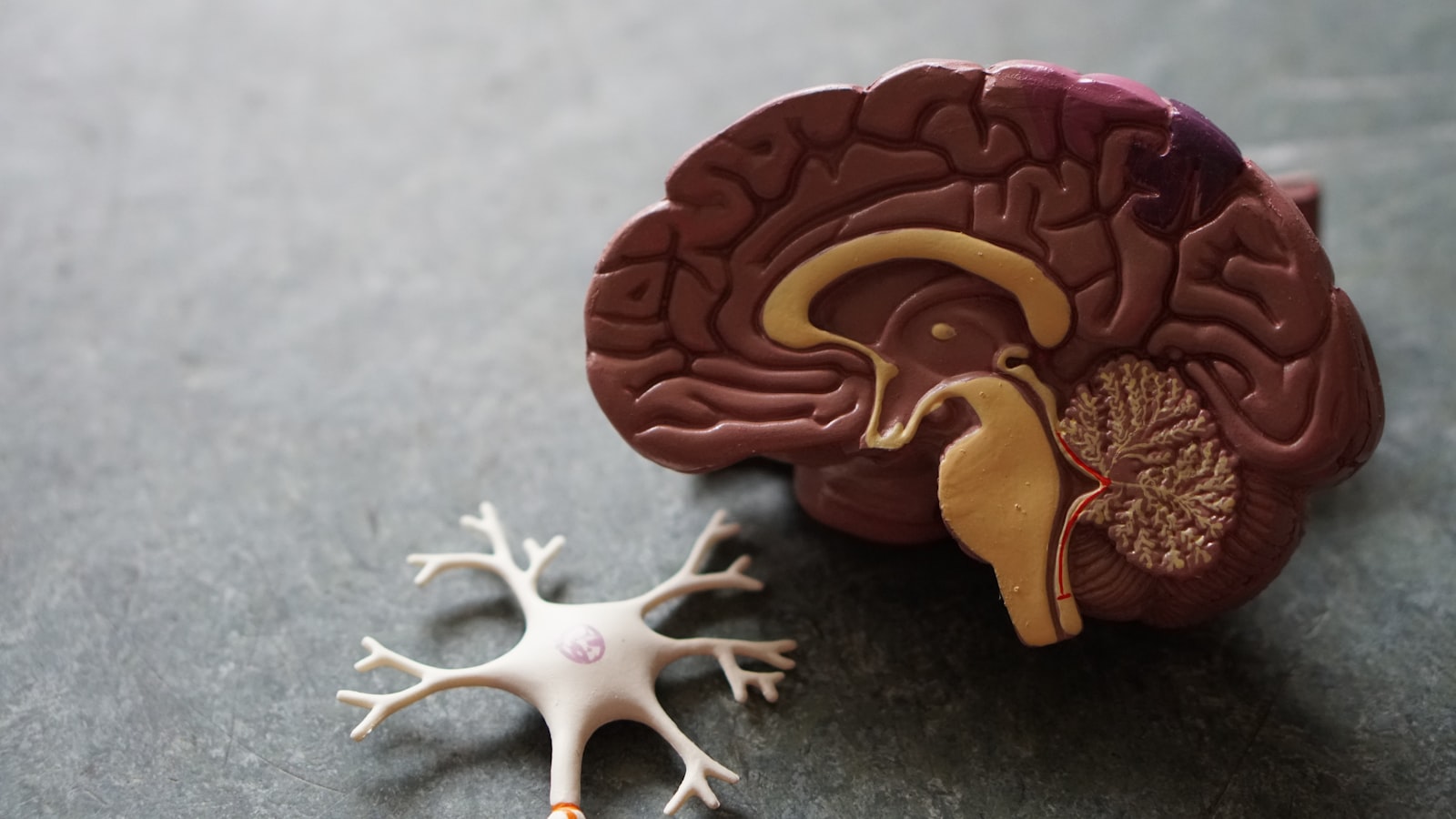
To understand why radiant thinking is so powerful, we must look at the structure of the neuron itself. A neuron is not a linear line; it is a central cell body with thousands of dendrites radiating outward to connect with other neurons. The brain’s architecture is, in essence, a three-dimensional mind map. When we engage in linear note-taking, we are asking our radiant brain to operate in a way that is structurally foreign to it. We are trying to force a multidimensional explosion of thought into a one-dimensional stream of ink.Mind mapping aligns our external output with our internal architecture. When we draw a branch, we are mimicking a dendritic connection. When we link two disparate ideas, we are mirroring the formation of a new synapse. This alignment reduces cognitive friction. Research into brain-computer interfaces and neurofeedback has shown that visual-spatial tasks engage larger clusters of cortical neurons than purely linguistic tasks. By mapping, you are essentially "upgrading" the bandwidth of your communication with yourself.
Furthermore, the use of color and imagery stimulates the amygdala and the hippocampus—the centers of emotion and memory. Information that is emotionally "tagged" or visually striking is prioritized by the brain for long-term storage. This is why you can remember the details of a vivid dream or a beautiful painting for years, yet forget a list of grocery items in minutes. The mind map turns dry data into a vivid experience.
From Porphyry to Leonardo: The Historical Roots of Visual Thinking
While the term "mind map" was popularized in the 1970s, the practice of visual thinking is as old as civilization. The 3rd-century philosopher Porphyry of Tyros created visual trees to categorize the concepts of Aristotle. Leonardo da Vinci’s notebooks are perhaps the most famous examples of proto-mind mapping, filled with sketches, diagrams, and interconnected notes that transcend the boundaries of art and science. Da Vinci understood that to truly understand a machine, a muscle, or a weather pattern, one had to see it from multiple angles and connect it to its surrounding environment.In the early 20th century, researchers like Charles Peirce and later the Gestalt psychologists explored the "Diagrammatic Reasoning" that underlies human intelligence. They argued that diagrams are not just representations of thought; they are tools of thought. They allow us to perform "mental experiments" that would be impossible with words alone. The modern mind map is simply the latest evolution of this noble tradition, refined by modern neuroscience and digital technology.
When you sit down to create your next map, you are joining a lineage of thinkers who refused to let their ideas be caged by the margins of a page. You are choosing to see the world not as a list of things, but as a web of relationships. This shift in perspective is the first step toward true mastery in any field.
Key Takeaways
- Visuals Double Retention: Leveraging Dual Coding Theory can improve information recall by up to 65% by activating both verbal and visual neural pathways.
- Beat the 24-Hour Collapse: Without visual anchoring or active review, the brain forgets 67% of new information within a single day.
- Active Retrieval is King: Mind mapping forces the brain into active construction rather than passive consumption, leading to 150% better long-term retention.
- Hierarchy Communicates Meaning: Using radiant structures and chromatic coding allows the brain to process importance and category before a single word is read.
- Modern Tools Enhance Ancient Skills: While paper is powerful, digital spatial canvases like Scrintal and Heptabase allow for infinite scaling and collaborative knowledge building.
Want to go deeper?
Turn this book into an interactive visual mind map on Summary Maps. Explore every chapter, key idea, and connection — all in one view.
Try Summary Maps Free →